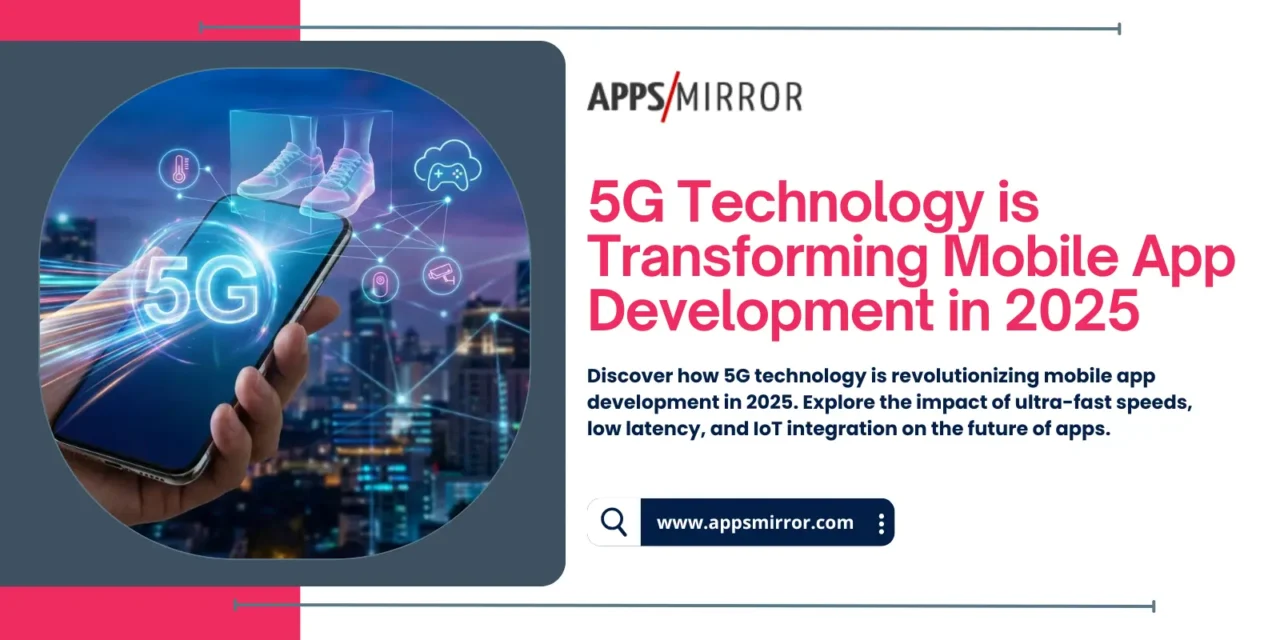
The mobile app industry is experiencing a seismic shift as 5G technology continues its global rollout. With download speeds up to 100 times faster than 4G and latency reduced to just one millisecond, 5G is fundamentally changing how developers build applications and how users interact with them.
The 5G Revolution: Understanding the Impact
5G isn’t just an incremental upgrade from 4G—it represents a complete paradigm shift in mobile connectivity. The technology operates on three distinct frequency bands, each offering different levels of coverage and performance. This multi-layered approach enables everything from enhanced mobile broadband to ultra-reliable low-latency communications.
The numbers tell a compelling story. By early 2025, there are approximately 2.17 billion 5G mobile subscriptions worldwide, and this figure is projected to reach 5.56 billion by decade’s end. For app developers and businesses, this rapid adoption creates unprecedented opportunities to build applications that were previously impossible.
Lightning-Fast Performance That Changes Everything
Speed is the most immediately noticeable benefit of 5G technology. Mobile apps can now achieve data transfer rates of up to 10 Gbps, transforming user experiences across every category. Video streaming apps deliver ultra-high-definition content without buffering, while gaming applications offer console-quality experiences on mobile devices.
This enhanced speed directly impacts app store optimization strategies, as users expect instant downloads and seamless updates. Apps that once required careful size management can now include richer media and more robust features without sacrificing user acquisition rates.
For businesses leveraging mobile commerce, 5G eliminates friction points in the purchasing journey. Product images load instantly, augmented reality try-ons function smoothly, and checkout processes complete without delay—all factors that directly improve conversion rates and customer satisfaction.
Near-Zero Latency Unlocks Real-Time Applications
Perhaps even more transformative than speed is 5G’s ultra-low latency. With response times of just one millisecond, applications can now deliver truly real-time experiences. This capability is revolutionizing industries from healthcare to gaming.
Telemedicine applications benefit enormously from this advancement. Doctors can conduct remote consultations with high-definition video that captures crucial visual details, while remote surgery becomes feasible through precise, instantaneous control systems. The healthcare sector is witnessing transformation as wearable devices transmit real-time patient data to medical professionals without any perceptible delay.
Multiplayer gaming has reached new heights with 5G connectivity. Cloud gaming services stream high-quality games directly to mobile devices, eliminating the need for powerful local hardware. Competitive esports on mobile platforms now rival console experiences, with zero lag giving players the responsiveness they demand.
IoT Integration Creates Smarter Connected Experiences
One of 5G’s most significant capabilities is supporting up to one million connected devices per square kilometer—a staggering increase from 4G’s capacity of roughly 2,000 devices in the same space. This enables the massive Internet of Things networks that define smart cities and connected homes.
Smart home applications can now seamlessly coordinate dozens of connected devices simultaneously. Users control lighting, security systems, thermostats, and appliances through unified mobile apps with instant response times. The technology supporting these best productivity apps extends beyond entertainment into practical daily management.
Industrial IoT applications are transforming manufacturing and logistics. Mobile apps monitor equipment performance in real-time, predict maintenance needs, and optimize supply chains with unprecedented accuracy. This connectivity reduces operational costs while improving efficiency across entire industries.
Enhanced Cloud Computing Capabilities
5G’s speed and low latency make cloud-based mobile applications more practical and powerful than ever. Apps can offload intensive processing to cloud servers, delivering desktop-class functionality on mobile devices without draining battery life or requiring high-end hardware.
This shift enables developers to create lighter applications that access powerful cloud resources on demand. Photo and video editing apps perform complex operations in the cloud, while users experience near-instant results. Storage limitations become less restrictive as seamless cloud synchronization keeps content accessible across all devices.
For enterprise applications, 5G-enabled cloud connectivity supports sophisticated business tools that rival desktop software. Sales teams access real-time analytics, designers collaborate on high-resolution assets, and remote workers maintain productivity through responsive cloud-based platforms.
Augmented and Virtual Reality Go Mainstream
The combination of high bandwidth and low latency finally makes mobile AR and VR practical for mainstream adoption. These technologies, long promised but limited by network constraints, are now delivering on their potential across multiple industries.
Retail applications use AR to let customers visualize products in their homes before purchasing. Furniture retailers show how items fit in actual spaces, while fashion brands offer virtual try-ons that accurately reflect how clothes will look and fit. These immersive experiences significantly reduce return rates while increasing customer confidence.
Education and training applications leverage VR for immersive learning experiences. Medical students practice procedures in virtual environments, while technical workers receive hands-on training without physical equipment. The quality of these experiences, previously requiring dedicated hardware and stable connections, now works seamlessly on mobile devices through 5G networks.
Security Considerations in the 5G Era
With increased connectivity comes heightened security challenges. The massive number of connected devices and faster data transmission create new vulnerabilities that developers must address. Mobile apps in 2025 prioritize robust security measures including end-to-end encryption, advanced authentication methods, and continuous monitoring.
Network slicing—a unique 5G feature—allows operators to create isolated virtual networks for specific applications. This capability enables ultra-secure connections for sensitive data transmission, particularly valuable for financial apps and healthcare applications handling protected information.
Developers implementing 5G capabilities must balance performance with security. While faster networks enable richer features, they also require more sophisticated protection against emerging threats. Regular security updates and proactive vulnerability management become essential components of app maintenance.
Business Implications and Strategic Opportunities
For businesses, 5G adoption represents both opportunity and necessity. Companies that leverage 5G capabilities gain competitive advantages through superior user experiences and innovative features. Those that ignore this technology risk falling behind as user expectations rise.
Early adopters are already seeing results. Businesses implementing 5G-enabled applications report improved customer engagement, higher retention rates, and increased revenue per user. The technology enables new monetization strategies, from premium real-time features to enhanced in-app experiences that command higher prices.
Strategic planning for 5G integration requires understanding both current capabilities and future potential. While coverage remains uneven—particularly for high-band networks in rural areas—the technology’s trajectory is clear. Businesses investing in 5G-ready applications position themselves for sustained success as networks expand.
Developer Considerations and Best Practices
Building for 5G requires developers to rethink traditional mobile app architecture. The ability to process data in real-time, handle high-resolution media effortlessly, and maintain persistent connections changes fundamental design assumptions.
Developers should adopt a “5G-first, but 4G-compatible” approach. Applications should leverage full 5G capabilities where available while maintaining functionality on older networks. This ensures broad accessibility while delivering premium experiences to users with latest-generation connectivity.
Testing becomes more complex with 5G applications. Developers must verify performance across different network types, account for varying latency levels, and ensure seamless transitions as users move between coverage areas. Thorough testing prevents frustrating user experiences that damage retention and ratings.
Looking Ahead: The Future of 5G Mobile Apps
The full potential of 5G technology remains largely untapped. As infrastructure expands and devices evolve, new application categories will emerge that we can barely imagine today. Edge computing, advanced robotics, and sophisticated automation will all rely on 5G’s capabilities.
Network APIs—standardized interfaces that let applications access specific 5G network features—promise to unlock even more possibilities. Developers will be able to request guaranteed quality of service, specific latency levels, and dedicated bandwidth, enabling precise control over application performance.
The convergence of 5G with other emerging technologies creates compound benefits. When combined with advanced processors, improved batteries, and enhanced displays, 5G enables mobile applications that rival or exceed what was previously possible only on powerful desktop systems.
Conclusion
5G technology is not simply improving mobile apps—it’s redefining what mobile applications can be and do. From real-time collaboration to immersive experiences, from IoT integration to cloud-based processing, 5G removes limitations that have constrained mobile development for years.
For developers, businesses, and users alike, 5G represents a transformative opportunity. Applications built to leverage these capabilities will deliver experiences that set new standards for performance, responsiveness, and functionality. As 5G networks continue expanding globally, the mobile app landscape will continue evolving in exciting and unexpected ways.
The question is no longer whether to embrace 5G, but how quickly you can adapt to capture the opportunities it creates. Those who move decisively will shape the future of mobile experiences, while those who hesitate will find themselves struggling to catch up in an increasingly competitive landscape.