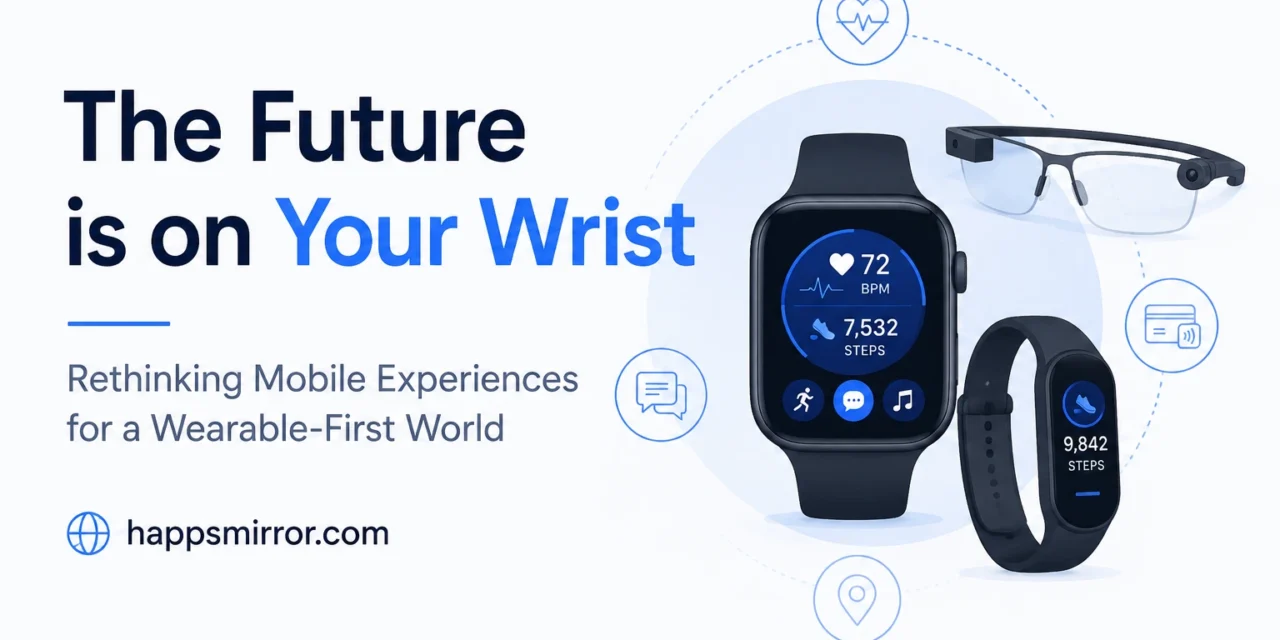
The smartphone’s monopoly on mobile computing is ending as wearable devices claim increasing mindshare and functionality. With the global wearable market growing at 13.6% annually and projected to surpass $265 billion by 2030, smartwatches, fitness trackers, and emerging form factors including AR glasses are transforming how users access information and interact with digital services. This shift demands rethinking mobile app strategies beyond traditional smartphone constraints.
The Wearable Ecosystem Maturation
Wearable technology has evolved from niche fitness gadgets into comprehensive computing platforms. The Apple Watch dominates smartwatch markets with sophisticated health monitoring, communication capabilities, and standalone app ecosystem. Samsung’s Galaxy Watch and Google’s Pixel Watch provide Android alternatives with comparable functionality. Fitness-focused devices from Fitbit, Garmin, and Whoop serve dedicated health enthusiasts seeking specialized tracking.
The market expansion reflects genuine utility rather than novelty. Early wearables offered limited functionality requiring constant smartphone connections. Modern devices operate independently with cellular connectivity, onboard GPS, music storage, and payment capabilities. Users leave smartphones home while running, traveling, or exercising—scenarios previously impossible for connected device users.
Healthcare applications drive substantial wearable adoption as devices evolve from step counters into medical-grade monitoring tools. Continuous heart rate tracking, ECG capabilities, blood oxygen measurement, and sleep analysis provide valuable health insights. Fall detection and emergency SOS features offer safety benefits particularly valuable for elderly users and their families.
The convergence of wearables with other technologies creates compound value. Integration with smart home systems enables wrist-based control of lighting, thermostats, and security. Automotive connections allow watch-based vehicle unlocking and remote start. Payment system integration makes wallets increasingly optional for transactions.
Development Considerations for Wearable Apps
Creating effective wearable applications requires fundamentally different thinking than smartphone development. Screen real estate constraints demand radical simplification as interfaces must work on displays measuring 1.5-2 inches. Information density possible on smartphones becomes illegible on watches. Designers must ruthlessly prioritize, showing only essential information through carefully crafted glanceable interfaces.
Interaction paradigms favor minimal input as typing on watch screens proves impractical. Voice commands, preset responses, and simple taps/swipes replace complex interactions possible on smartphones. Applications requiring significant text input or precise manipulation fundamentally misalign with wearable strengths.
Battery life considerations affect every design decision. Wearables with smaller batteries than smartphones must conserve power aggressively. Apps that constantly wake screens, poll sensors continuously, or maintain persistent connections drain batteries unacceptably. Efficient implementations update only when necessary, use low-power sensors appropriately, and respect system battery management.
Context awareness becomes crucial as wearables accompany users throughout daily activities. Apps should adapt to contexts including exercise, sleep, work, and leisure. Notifications appropriate while jogging might interrupt important meetings. Suggested actions useful during morning routines prove irrelevant late evenings. Contextual intelligence separates good wearable apps from annoying ones.
Building for both iPhone ecosystem through watchOS and Android wearables via Wear OS requires platform-specific expertise while maintaining consistent cross-platform experiences.
Fitness and Health Applications
Health and fitness represents wearables’ killer application category where devices excel beyond smartphone capabilities. Continuous monitoring during exercise provides real-time feedback impossible with pocket-dwelling phones. Heart rate zones, pace, distance, elevation—all update live on wrists without fumbling for devices.
Workout apps leverage wearable sensors for automatic activity detection starting tracking when users begin exercising. Manual logging disappears as devices recognize running, cycling, swimming, or other activities. This passive tracking reduces friction while ensuring comprehensive activity records.
Recovery and wellness apps analyze sleep quality, stress levels, and readiness using continuous health data. Morning insights inform daily planning—suggesting light workouts after poor sleep or celebrating optimal recovery enabling intense training. This personalized guidance helps users optimize health outcomes.
Medical applications monitor chronic conditions through passive data collection. Diabetes apps track glucose levels via continuous monitors, cardiac apps detect irregular rhythms triggering medical alerts, and respiratory apps identify breathing abnormalities. These capabilities transform wearables from lifestyle accessories into genuine medical devices.
Communication and Productivity
Message notifications on wrists enable quick communication triage without retrieving phones. Users glance at incoming messages, dismiss unimportant ones, and respond to urgent communications through preset replies or voice dictation. This filtered approach reduces phone checking while ensuring nothing critical gets missed.
Call handling through wearables provides discrete communication during situations where pulling out phones seems inappropriate. Accepting calls via watch enables brief conversations through built-in speakers or connected earphones. The hands-free operation proves particularly valuable while driving, cooking, or exercising.
Calendar apps surface upcoming appointments through watch faces and timely notifications. Users check schedules at glance without phone interaction. Meeting reminders with relevant details ensure users arrive prepared and punctual. Time-sensitive notifications leverage wrist proximity guaranteeing visibility versus phones potentially missed in bags or pockets.
Email and messaging apps prioritize filtering given limited display space and user attention. Smart filtering shows only important messages or those from VIP contacts. Quick actions enable archiving, starring, or basic responses without opening full smartphone apps.
Payment and Authentication
Contactless payment through wearables represents major convenience factor driving adoption. Users pay for purchases through wrist taps leaving wallets and phones in pockets or bags. The seamless experience makes wearable payments preferred over alternatives even when phones are readily accessible.
Transit integration enables turnstile passage, fare payment, and transfer tracking through simple watch taps. Commuters move through systems without fumbling for cards or phones. Real-time balance updates and trip histories provide financial tracking absent from traditional fare cards.
Building access and authentication leverage wearable proximity for seamless authorization. Employees wave watches past readers to unlock doors, clock in/out, or access secure areas. Two-factor authentication apps generate codes on wrists eliminating phone dependencies during login flows.
Hotel room keys, car unlocking, and event ticketing similarly benefit from wearable form factors. Users tap watches to access authorized spaces without juggling cards, phones, or physical keys. The convenience extends beyond minor savings of seconds into genuinely improved experiences particularly when hands are full.
Notification Management
Effective wearable experiences require sophisticated notification filtering as overwhelming wrist alerts quickly become annoying. Smart delivery rules consider time, location, activity, and importance. Urgent messages arrive immediately while less critical notifications wait for appropriate moments or batch together avoiding constant interruptions.
Custom notification settings per app enable granular control. Users might want all messages from messaging apps but only urgent emails from work accounts. Calendar notifications might deliver for imminent meetings but stay silent for events hours away. This customization creates balanced awareness without notification overload.
Do Not Disturb modes automatically silence notifications during sleep, exercise, or focus times. Smart implementations detect contexts and adjust accordingly—silencing during detected sleep periods, allowing only emergency contacts during configured focus times, and resuming normal delivery when contexts shift.
Actionable notifications enable quick responses directly from wrists without deeper app engagement. Two-factor codes auto-fill, meeting accepts happen through single taps, and quick replies handle simple messages. This action-oriented approach respects that wearable interactions should stay brief.
Audio and Voice Interfaces
Voice control becomes primary interaction method for wearables given screen size constraints and hands-free use cases. Users speak commands naturally rather than navigating through tiny menus. This voice-first approach aligns perfectly with wearable strengths while bypassing limitations.
Podcast and audiobook apps leverage wearable independence enabling content consumption during exercise without phones. Downloaded content plays through Bluetooth headphones or watch speakers. Playback controls through watch interfaces enable convenient management without phone interaction.
Voice memos and quick capture apps preserve thoughts, reminders, and ideas through simple voice recordings. Users speak fleeting thoughts knowing they’ll be transcribed and synchronized to phones for later review. This frictionless capture prevents forgotten insights.
Real-time translation apps provide valuable travel utility. Speaking into watches produces translations played aloud through watch speakers or displayed on screens. This immediate translation capability helps navigate foreign environments without fumbling for phones.
Development Frameworks and Tools
WatchOS provides Apple’s development environment for Apple Watch apps. SwiftUI enables efficient interface creation while HealthKit integration accesses health data. Complications—customizable watch face elements—display app information at constant glance. Developers leverage these platform-specific capabilities creating deeply integrated experiences.
Wear OS supports Android smartwatch development using Kotlin or Java with Material Design guidelines. The platform provides sensors, notifications, and voice access through Google Assistant. Standalone apps run without phone connectivity while companion apps extend functionality.
Cross-platform frameworks including Flutter and React Native add wearable support enabling code sharing between smartphone and watch versions. This approach streamlines development though sometimes requiring platform-specific optimizations for ideal experiences.
Challenges and Limitations
Screen size constraints fundamentally limit certain application categories. Complex data visualization, lengthy reading, and detail-intensive tasks remain better suited to larger displays. Developers must honestly assess whether wearable versions provide genuine value or merely existence for completeness.
User interaction duration expectations differ radically from phones. Users glance at watches for seconds, not minutes. Apps requiring extended interaction fundamentally misalign with usage patterns. Quick information access and simple actions should comprise core wearable functionality.
Battery anxiety affects user behavior as wearables typically last one to two days between charges. Apps that noticeably impact battery life risk uninstallation. Energy efficiency testing throughout development ensures apps don’t become battery villains.
Platform fragmentation affects Android wearables more than Apple Watch ecosystem. Different manufacturers, form factors, and OS versions create testing challenges ensuring consistent experiences. Prioritizing popular devices for testing while accepting imperfect support on edge cases balances quality and development resources.
Privacy and Data Sensitivity
Wearables collect intimate data including location history, health metrics, communication patterns, and financial transactions. This comprehensive personal information requires responsible handling respecting user privacy. Transparent policies, secure storage, and minimal collection practices build essential trust.
On-device processing prevents unnecessary data transmission to cloud services. Health analysis, activity detection, and other processing can often occur locally maintaining privacy. Only aggregate or necessary data should synchronize to servers.
User control over data sharing enables selective disclosure. Users might share step counts publicly while keeping heart rate private. Granular permissions respect that different data types have different sensitivity levels.
Regulatory compliance including HIPAA for health applications and GDPR for European users imposes legal requirements beyond best practices. Wearable apps handling sensitive data must implement appropriate controls and documentation proving compliance.
Future Directions
Augmented reality glasses represent the next wearable frontier with devices from Apple, Meta, and others promising mainstream AR. These head-mounted displays will enable hands-free information overlays, immersive experiences, and computing interactions that make current wearables seem primitive.
Advanced health sensors will expand medical applications. Non-invasive glucose monitoring, blood pressure measurement, and hydration tracking are emerging capabilities. As accuracy improves and regulatory approvals progress, wearables will increasingly serve medical purposes.
Neural interfaces may eventually enable thought-based control. While fully implanted brain-computer interfaces remain invasive, external neural sensors could detect intent enabling hands-free, voice-free device control. This technology would make current interactions seem clumsy by comparison.
The convergence of wearables with ambient computing will create seamless experiences spanning multiple devices. Watches, phones, smart home devices, and future form factors will work together intelligently, with each handling appropriate aspects of unified experiences.
Conclusion
Wearable devices have evolved beyond smartphone accessories into independent computing platforms demanding purpose-built applications. The unique constraints and capabilities of wrist-worn devices require fundamentally different design approaches emphasizing glanceable information, minimal interaction, and contextual intelligence.
For developers and businesses, wearable integration isn’t optional—it’s essential for comprehensive mobile strategies. As users spend increasing time interacting with wearables rather than phones, applications without wearable versions will feel incomplete. Those embracing wearable development now position themselves advantageously as these devices continue proliferating.
Discover more wearable technology trends and development insights on AppsMirror.