
The Changing Face of Defense
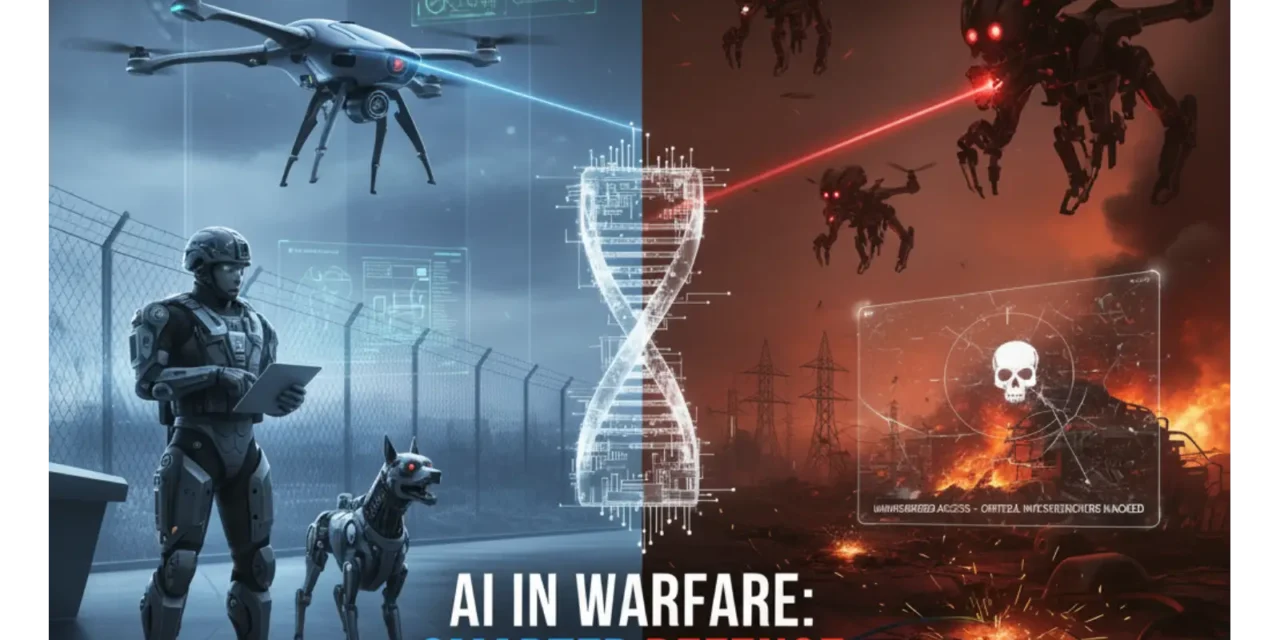
For most of history, wars were fought with swords, muskets, and eventually tanks and planes. Today, the battlefield is undergoing another transformation—this time powered by artificial intelligence (AI). From autonomous drones that can identify and strike targets to predictive systems that forecast enemy movements, AI is redefining modern defense strategies.
While the promise of AI in warfare includes faster decision-making and reduced human casualties, it also raises critical ethical and security concerns. The debate is no longer about whether AI will shape the future of warfare, but about how—and at what cost.
Smarter Tools, Faster Decisions
Military operations involve processing massive amounts of data: satellite images, radar signals, communication intercepts, and troop movements. Humans alone cannot analyze all of this in real time. AI systems step in by identifying patterns, flagging threats, and recommending strategies instantly.
Autonomous drones can monitor borders, AI algorithms can detect cyber intrusions, and robotic vehicles can resupply troops in dangerous environments. In theory, these tools reduce risks for soldiers and increase efficiency on the battlefield.
Autonomous Weapons: The Big Debate
The most controversial aspect of AI in warfare is the rise of autonomous weapons—machines capable of selecting and engaging targets without human intervention. Proponents argue they reduce the need to send soldiers into dangerous zones. Critics warn they could act unpredictably, escalate conflicts, or be misused by authoritarian regimes.
International organizations are already debating whether to ban or regulate “killer robots.” The challenge lies in balancing innovation with responsibility before these systems become widespread.
Cyber Warfare and AI
Modern conflict isn’t limited to physical battlegrounds. Nations are already engaged in cyber warfare, and AI is a powerful weapon here too. AI algorithms can detect vulnerabilities in enemy systems, automate attacks, and defend against intrusions.
The danger is that cyber wars can escalate silently, affecting not just governments but also critical infrastructure like power grids, hospitals, and financial systems.
AI’s role in cyber defense may ultimately be as important as its role in physical warfare. With global economies and daily life depending on digital systems, cyber resilience becomes a matter of national security.
Who’s Leading the AI Arms Race
The United States, China, and Russia are investing billions in AI-powered defense systems. Companies like Palantir, Lockheed Martin, and DARPA-backed startups are at the forefront of developing AI for intelligence analysis, drone control, and decision-making. Smaller nations are also joining the race, often focusing on niche areas such as surveillance or cyber defense.
This global competition raises concerns about an AI arms race. Unlike nuclear weapons, AI tools can be developed by multiple actors, including non-state groups, which increases risks of misuse.
The Benefits and the Risks
Merits:
- Reduces the number of soldiers exposed to dangerous missions.
- Enables faster, data-driven decision-making in high-pressure scenarios.
- Provides better surveillance and threat detection.
- Strengthens cybersecurity in both military and civilian domains.
Demerits:
- Ethical dilemmas around autonomous weapons and accountability.
- Potential for escalation if AI misinterprets data.
- Risk of AI tools falling into the hands of terrorists or rogue states.
- Lack of global regulations to control AI warfare technology.
What the Future Might Look Like
The future battlefield could involve hybrid teams of humans and AI systems. Soldiers equipped with AI-powered exoskeletons, real-time augmented reality maps, and robotic teammates may become standard. Drone swarms coordinated by algorithms could replace traditional fighter jets in some missions.
Beyond combat, AI will also play a role in peacekeeping—analyzing conflict zones, predicting unrest, and providing early warnings to prevent violence. Whether the technology is used for escalation or prevention depends largely on the policies and ethical frameworks we build today.
Technology for Good
AI in warfare is perhaps the most complex example of technology for good. Used wisely, it can save lives, prevent conflicts, and protect nations. Used recklessly, it could destabilize global peace.
The responsibility lies with governments, tech companies, and international organizations to set boundaries and ensure AI enhances defense without compromising humanity.
The challenge isn’t just about smarter machines—it’s about smarter choices.