
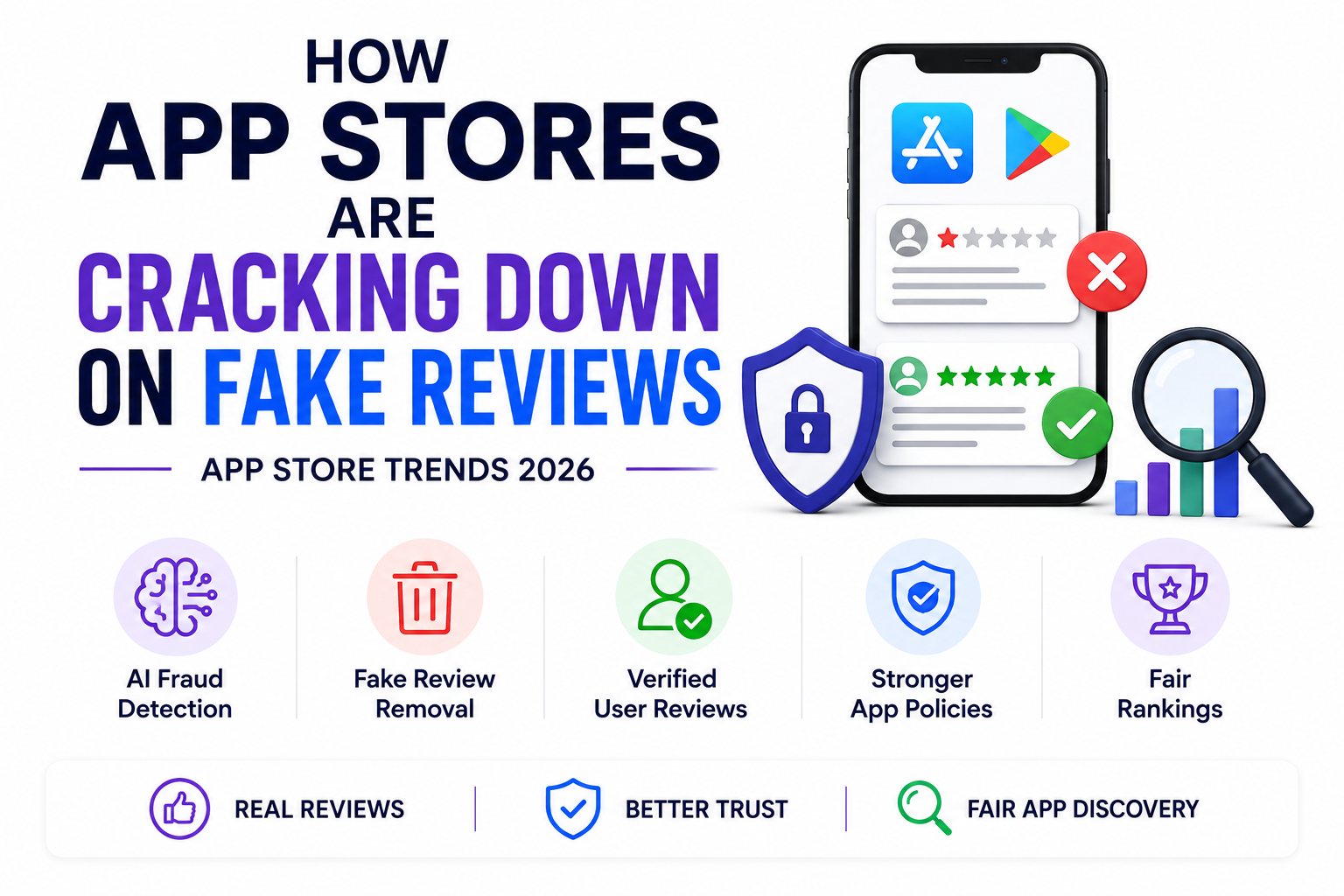
Fake and incentivized app reviews have quietly inflated app store rankings for years, whether through outright purchased five-star reviews or more subtle incentivized review campaigns offering discounts or in-app currency in exchange for a positive rating, both of which distort the genuine signal reviews are supposed to provide to prospective users. By 2026, both Apple and Google have invested considerably more in detecting and removing this kind of manipulation, using pattern detection that flags suspicious review clusters, unusual timing patterns, and device fingerprinting to catch coordinated fake review campaigns that were previously difficult to distinguish from genuine organic feedback at scale. This shift matters for developers and users alike, since reviews only serve their intended purpose when they actually reflect genuine experience.
Pattern-Based Detection Systems
Modern review fraud detection increasingly analyzes patterns like unusually clustered review timing, similar phrasing across supposedly unrelated reviewers, and device or account signals that suggest coordinated activity rather than genuinely independent organic feedback.
Stricter Policies Against Incentivized Reviews
Both major app stores have tightened policies explicitly prohibiting offering rewards or discounts in exchange for reviews, with real enforcement consequences including app removal for developers caught running incentivized review campaigns.
Increased Weight on Verified Purchase Reviews
Reviews from users with a verified purchase or genuine extended usage history increasingly carry more ranking weight than reviews from accounts with no meaningful usage pattern, making it harder for a burst of fake reviews from throwaway accounts to meaningfully move rankings.
What This Means for Legitimate Developers
Developers who’ve built genuine user satisfaction now see their authentic reviews carry proportionally more ranking influence as fraudulent alternatives get filtered out more effectively, rewarding real product quality over review manipulation shortcuts that used to offer a genuine competitive edge.
The practical effect for the broader app market has been a gradual but genuine improvement in review reliability as a signal, making it more worthwhile for developers to invest in real user satisfaction and organic review generation strategies, like simply asking genuinely happy users at the right moment, rather than any form of manipulation that’s grown considerably riskier to attempt. Smaller developers who previously felt pressure to compete against larger apps with the resources to run fake review campaigns now compete on a somewhat more level playing field as that specific tactic becomes both harder to execute successfully and more likely to result in real penalties. This crackdown connects to a broader pattern discussed in earlier coverage of AI-driven app store search, where genuine engagement signals increasingly matter more than any single metric that can be artificially inflated through manipulation. Users browsing reviews themselves should still apply some healthy skepticism toward reviews that feel oddly generic or suspiciously enthusiastic, even as detection systems continue to improve.
App store review fraud detection has genuinely improved enough by 2026 that the risk-reward calculation for attempting review manipulation has shifted meaningfully against developers tempted to try it. Developers investing in real product quality and organic user satisfaction are increasingly better positioned than those hoping a burst of fake reviews might still meaningfully move the needle in an environment built specifically to catch that exact pattern. This shift ultimately benefits users most of all, restoring some genuine trust in a signal that had grown considerably less reliable over the years, and that restored trust is worth more to the whole ecosystem than any short-term ranking boost manipulation ever provided.