
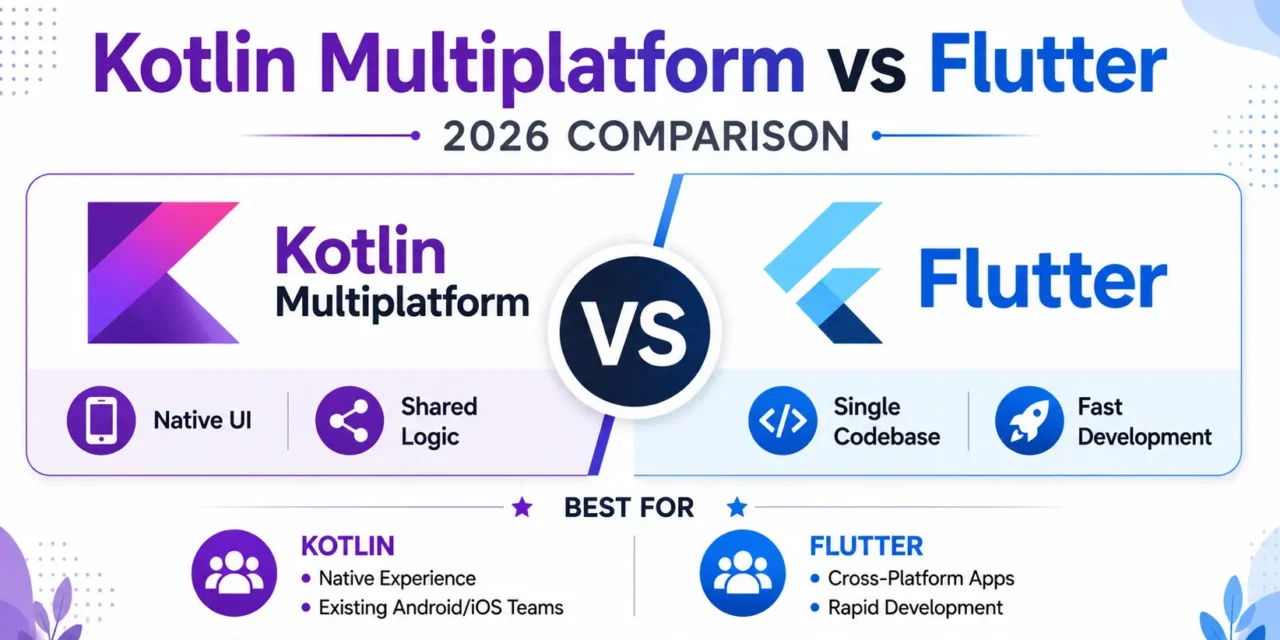
Flutter has dominated cross-platform mobile development conversations for years with its promise of a single codebase producing genuinely consistent apps on both Android and iOS, but Kotlin Multiplatform has emerged as a genuinely serious alternative with a meaningfully different philosophy, sharing business logic across platforms while still using each platform’s native UI framework rather than Flutter’s own custom rendering engine. By 2026, both approaches have matured into production-proven choices used by major companies, and the choice between them depends heavily on how much a team values native platform UI fidelity versus Flutter’s more complete, consistent cross-platform package. This breakdown focuses on that practical tradeoff rather than declaring one framework an outright overall winner.
Where Flutter Wins
Flutter’s single codebase covers both UI and logic, and its custom rendering engine delivers genuinely pixel-perfect visual consistency across platforms, along with a mature, extensive widget ecosystem and generally faster initial development speed for most app types.
Where Kotlin Multiplatform Wins
Kotlin Multiplatform shares only business logic while keeping each platform’s native UI framework, delivering genuinely authentic native look and feel and performance on each platform, appealing especially to teams that already have native development expertise.
Adoption and Ecosystem Maturity
Flutter maintains a considerably larger community, more third-party packages, and more established hiring pools, while Kotlin Multiplatform’s ecosystem, though genuinely growing fast, remains comparatively newer and less extensively documented for edge cases.
What Teams Should Actually Choose
Teams prioritizing fast, consistent cross-platform UI development with a smaller team are generally better served by Flutter, while teams with existing native Android and iOS expertise wanting to share business logic without sacrificing native UI fidelity should seriously consider Kotlin Multiplatform.
The choice genuinely depends on team composition and priorities more than either technology being objectively superior in the abstract, since Flutter and Kotlin Multiplatform were built around meaningfully different philosophies of what cross-platform development should actually optimize for. Startups and smaller teams without dedicated native Android and iOS specialists generally get faster time-to-market from Flutter’s all-in-one approach, avoiding the need to maintain separate native UI code on each platform. Larger, more established companies with existing native development teams increasingly adopt Kotlin Multiplatform specifically to share business logic and reduce duplicate work without abandoning the native UI investment and platform-specific polish they’ve already built. Developers curious about both should genuinely try building the same small app in each framework, since the practical differences in workflow and feel become far clearer through direct hands-on comparison than through any single article. Hiring managers increasingly value demonstrated comfort with either approach over strong opinions about which one is theoretically superior.
Flutter remains the more approachable, all-in-one choice for teams wanting fast, visually consistent cross-platform development without deep native expertise, while Kotlin Multiplatform rewards teams willing to maintain native UI layers in exchange for genuinely authentic platform feel and shared business logic. Rather than treating this as a permanent rivalry, the most adaptable mobile developers increasingly understand both approaches well enough to recommend the right one for a specific team and project rather than defaulting to whichever framework they personally learned first. Trying both on a genuinely small side project remains the fastest way to develop an honest opinion rather than relying purely on secondhand comparisons like this one, and that hands-on experience tends to matter more in interviews than reciting either framework’s marketing points.