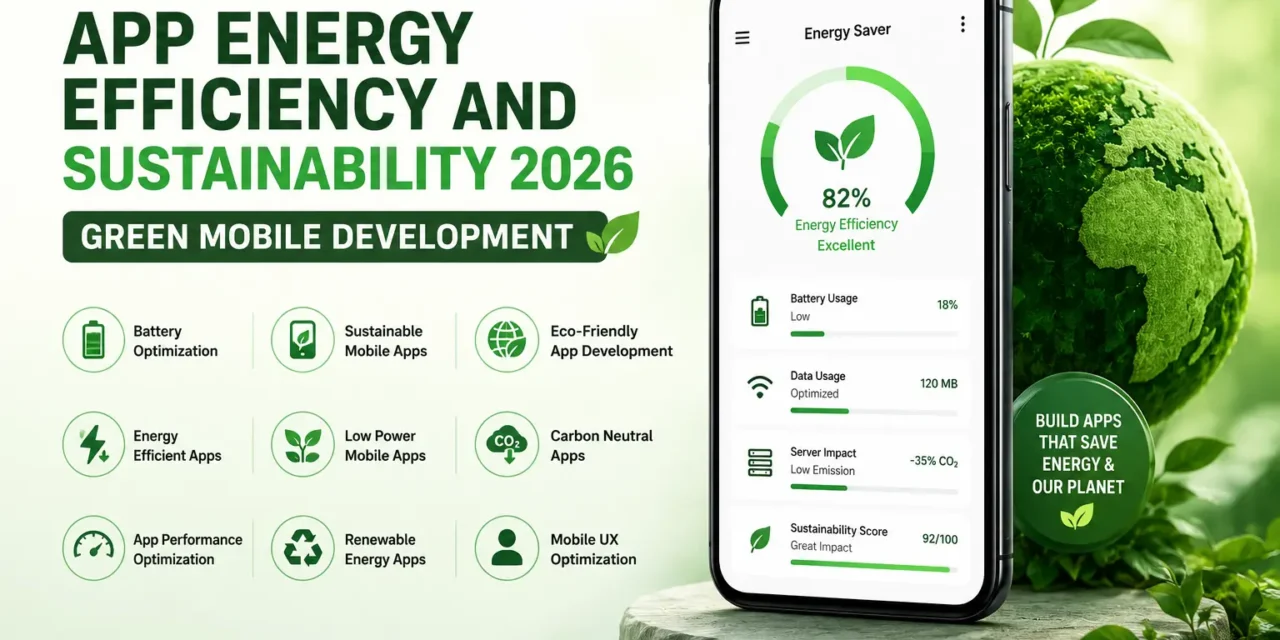
Mobile applications consume substantial energy—both on user devices and through backend infrastructure supporting them. As environmental consciousness grows and energy costs rise, app sustainability has evolved from optional consideration to business imperative and regulatory requirement. Efficient apps provide better user experiences through extended battery life while reducing environmental impact through decreased energy consumption. In 2026, sustainable mobile development represents both ethical responsibility and competitive advantage.
The Environmental Impact of Mobile Apps
Mobile apps’ carbon footprint extends beyond obvious electricity consumption. Data center operations supporting cloud services, backend APIs, and content delivery consume massive amounts of power. Telecommunications infrastructure transmitting data between devices and servers adds additional energy costs. User device battery charging, while individually small, compounds across billions of devices into significant environmental impact.
Research shows that optimizing applications for energy efficiency can reduce carbon emissions by 30-40% across the full stack from devices to data centers. These reductions matter enormously at scale—a popular app with 50 million users saving 10% battery consumption prevents thousands of tons of CO2 emissions annually.
Beyond environmental benefits, energy efficiency improves user experiences directly. Battery life ranks among users’ top device concerns. Apps that drain batteries quickly face uninstalls and negative reviews regardless of functionality. Efficient apps enable longer device usage between charges, improving satisfaction and retention.
Economic motivations align with environmental goals. Energy costs affect infrastructure expenses significantly. Cloud computing bills decrease when applications require less computational resources. Content delivery costs reduce when apps minimize data transfer. These savings flow directly to bottom lines while supporting sustainability.
Battery Optimization Fundamentals
Understanding battery drain sources enables targeted optimization. Screen display power consumption represents the largest battery draw for most apps. Bright screens on extended durations quickly deplete batteries. Apps should minimize screen-on time and reduce brightness when full illumination isn’t necessary.
Network communication drains batteries substantially as cellular radios consume significant power, particularly on weak signals. Apps should batch network requests rather than making constant individual calls. Background synchronization should occur opportunistically when devices are charging or on WiFi rather than aggressively on cellular connections.
GPS location services consume enormous power through satellite communication and processing. Apps requiring location should use the minimum accuracy necessary—coarse location for weather apps, precise only when essential for navigation. Background location tracking should be rare and explicitly justified to users.
Processing intensive operations including video rendering, encryption, and complex calculations stress processors causing power draw. Optimizing algorithms, offloading processing to more efficient cloud services, and avoiding redundant calculations all reduce energy consumption.
Sensor usage including accelerometers, gyroscopes, and environmental sensors adds incremental battery drain. Apps should access sensors only when necessary and unsubscribe from updates when data isn’t needed. Continuous sensor monitoring for features users rarely use wastes power without corresponding value.
For developers creating iPhone and Android applications, platform-specific energy profiling tools identify battery consumption sources enabling focused optimization efforts.
Server-Side Sustainability
Backend infrastructure sustainability requires attention as cloud services supporting mobile apps consume substantial electricity. Server utilization optimization ensures hardware operates efficiently. Idle or underutilized servers waste energy—autoscaling matches resources to demand preventing waste.
Code efficiency at the server level reduces processing requirements for equivalent functionality. Optimized database queries, efficient algorithms, and caching strategies decrease CPU cycles required per request. These microimprovements compound across millions of requests into meaningful energy savings.
Data center selection affects environmental impact significantly as electricity sources vary by region. Data centers powered by renewable energy create lower carbon footprints than coal-powered equivalents. Cloud providers increasingly offer carbon-neutral regions enabling environmentally conscious infrastructure choices.
Content delivery network optimization reduces data travel distances and redundant transfers. CDNs cache content geographically near users minimizing long-distance data transmission. Smart caching reduces origin server requests preventing repeated processing and transfer of identical content.
Serverless architectures enable extreme efficiency by charging only for actual computation used. Functions execute on-demand rather than maintaining always-running servers. For workloads with variable or intermittent demand, serverless approaches dramatically reduce idle resource waste.
Data Transfer Optimization
Every byte transmitted consumes energy through device radios, network infrastructure, and backend systems. Minimizing data transfer reduces environmental impact while improving user experiences through faster load times and lower data costs.
Image and media optimization represents low-hanging fruit. Properly compressed images reduce file sizes by 50-80% without visible quality loss. Modern formats including WebP and AVIF provide better compression than legacy JPEGs. Responsive images serve appropriate resolutions for device screens rather than transmitting unnecessarily high-resolution files.
API response optimization eliminates unnecessary data in server responses. Including only required fields, paginating large datasets, and compressing responses all reduce transfer sizes. GraphQL enables clients requesting exactly needed data rather than receiving entire objects with unused fields.
Caching strategies prevent redundant transfers. Aggressive client-side caching with appropriate cache headers means resources load from local storage rather than networks. Service workers enable sophisticated caching in web apps, while native apps use similar persistence mechanisms.
Delta synchronization transmits only changed data rather than complete datasets. Apps synchronizing large datasets should send incremental updates rather than full refreshes. This approach reduces bandwidth while speeding synchronization.
Efficient Background Processing
Background processing enables useful functionality but often wastes energy through unnecessary or poorly-scheduled operations. Apps should batch background tasks, executing multiple operations simultaneously rather than waking devices repeatedly. This consolidation minimizes radio and CPU activation overhead.
Opportunistic scheduling defers non-urgent background work until favorable conditions exist. Waiting for WiFi connections, charging states, or idle periods prevents background processing from degrading active user experiences or draining batteries during critical low-power situations.
WorkManager on Android and Background Tasks on iOS provide intelligent background execution scheduling. These platform APIs handle complexity of deferring work appropriately while ensuring eventual execution. Developers describe task constraints—requiring WiFi, charging, or idle states—and systems schedule optimally.
Background refresh limits should respect user settings and system hints. Aggressive background activity on battery power annoys users and drains batteries. Respecting platform-provided signals about appropriate background behavior maintains user trust and system citizenship.
UI Performance and Efficiency
Smooth UI rendering requires consistent 60 frames per second, but achieving smoothness efficiently without wasting power requires optimization. Unnecessary rendering cycles should be eliminated—redrawing unchanged UI elements wastes processing and power.
Layout optimization prevents complex view hierarchies that stress rendering systems. Flat layouts perform better than deeply nested views. Constraint systems should be simple and deterministic avoiding expensive layout calculations.
Animation efficiency matters as motion attracts user attention making smooth animation essential, but inefficient implementation causes both jank and battery drain. GPU-accelerated animations perform better than CPU-based alternatives. Simple transform animations consume less power than complex property animations.
Dark mode implementations reduce power consumption on OLED displays where black pixels don’t emit light. Apps supporting dark themes enable users to save battery through reduced screen power, particularly valuable on modern phones with OLED technology.
Monitoring and Measurement
Battery consumption requires active monitoring rather than assumptions about efficiency. Platform tools including Xcode Instruments and Android Profiler provide detailed energy usage breakdowns. Developers should profile apps regularly identifying efficiency regressions before releasing updates.
Continuous integration should include energy testing alongside functional and performance tests. Automated battery drain tests catch regressions where code changes unexpectedly increase consumption. Setting acceptable energy budgets for features prevents efficiency degradation over time.
Real-world testing complements lab measurements. Beta programs should gather battery impact feedback from diverse devices and usage patterns. Outlier devices or usage scenarios might reveal efficiency issues not apparent in controlled testing.
Analytics tracking battery levels when apps run reveals real-world impact. Comparing battery drain rates to competitors or previous app versions quantifies user-facing efficiency changes.
User Control and Transparency
Quality settings enable users trading off functionality for battery life. Apps with significant processing or network usage should offer power-saving modes reducing quality or frequency of expensive operations. This user control prevents forced choices between functionality and battery life.
Background activity transparency communicates what apps do while not actively used. Clear explanations of background processing reasons help users make informed decisions about permission grants. Unexplained background battery drain erodes trust causing uninstalls.
Battery usage statistics within apps help users understand consumption sources. Showing that location tracking or video streaming causes drain educates users enabling informed usage adjustments.
Push notification management enables users controlling update frequency. Aggressive notifications wake devices and drain batteries—user-configurable frequency balances engagement with power consumption.
Regulatory and Platform Requirements
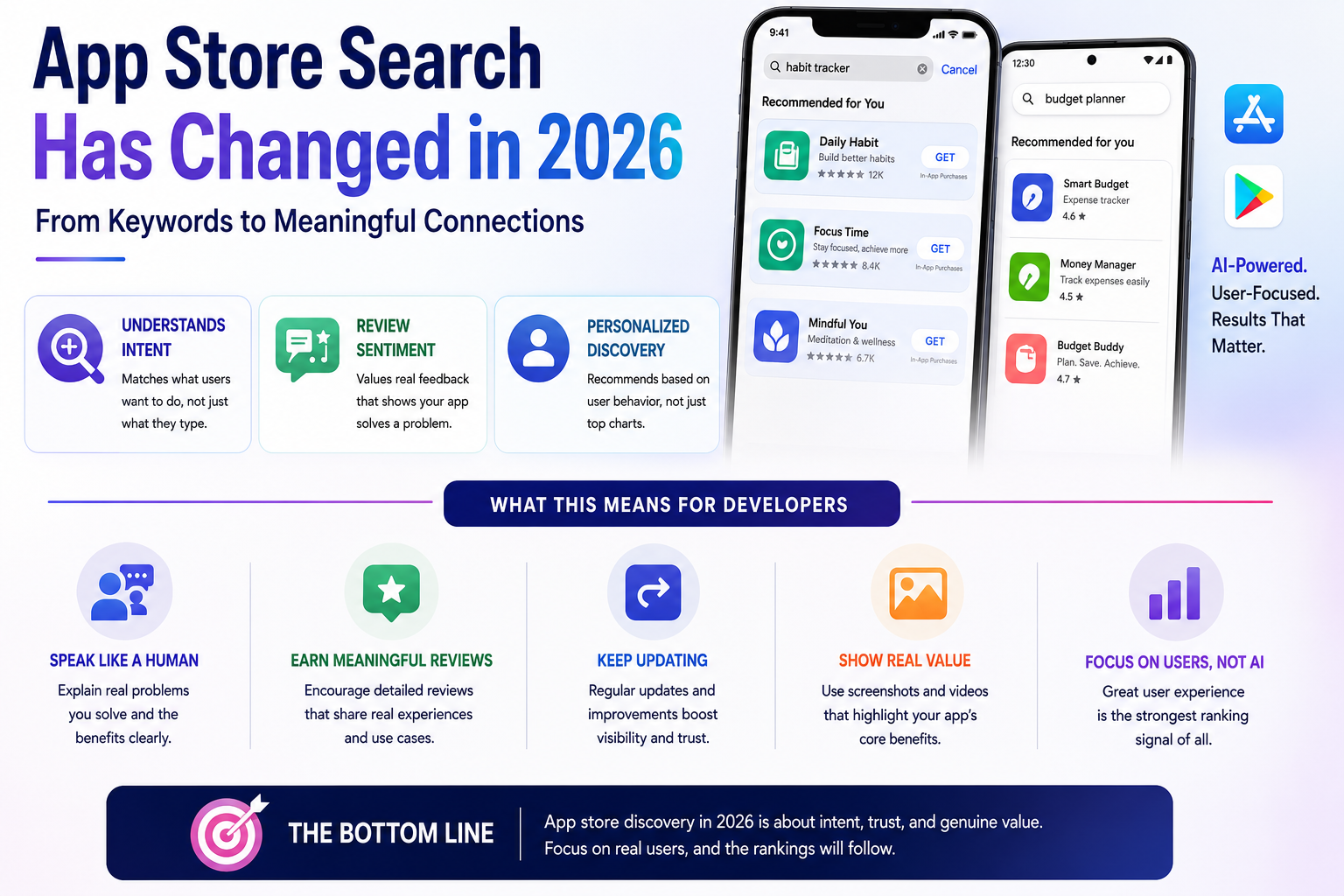
App store guidelines increasingly enforce energy efficiency standards. Apple requires energy impact reporting for TestFlight builds. Android vitals track background battery usage flagging apps with excessive consumption. Poor energy performance affects app store rankings and visibility.
European sustainability regulations may eventually mandate energy labeling for applications similar to appliance efficiency ratings. Proactive efficiency improvements position apps favorably for potential future requirements.
Corporate sustainability commitments drive enterprise app efficiency requirements. Organizations with carbon reduction goals assess application environmental impacts. Energy-efficient apps support corporate sustainability mandates.
Developer Tooling and Best Practices
Energy-efficient coding patterns should become standard practices. Lazy loading defers expensive operations until needed. Object pooling reuses allocations rather than constant memory churn. Efficient data structures reduce algorithmic complexity.
Framework and library choices affect baseline efficiency. Some frameworks include bloat providing features most apps never use. Lightweight alternatives or selective framework usage improves efficiency.
Code reviews should include energy impact consideration alongside functional correctness and security. Teams should cultivate culture where efficiency receives priority equal to features.
Documentation should provide energy-efficient implementation examples. Platform best practices guides increasingly include power consumption considerations alongside traditional programming guidance.
The Business Case for Efficiency
App store ratings improve when battery performance is good. Conversely, poor battery life generates one-star reviews damaging rankings and conversion. Energy efficiency directly affects acquisition and retention metrics.
User retention increases when apps don’t drain batteries. Users keep apps providing value without unacceptable power costs. Aggressive battery drain remains leading uninstall reason across categories.
Infrastructure costs decrease proportionally to efficiency improvements. Reducing backend processing and data transfer saves ongoing operational expenses. These savings compound over time and scale with growth.
Competitive differentiation emerges as users become more battery-conscious. Marketing energy efficiency resonates with environmentally-minded users while providing tangible practical benefits.
Future Directions
Renewable energy integration will become standard for cloud infrastructure. Apps will shift workloads to data centers with cleanest energy sources. Carbon-aware computing schedules processing when renewable energy availability peaks.
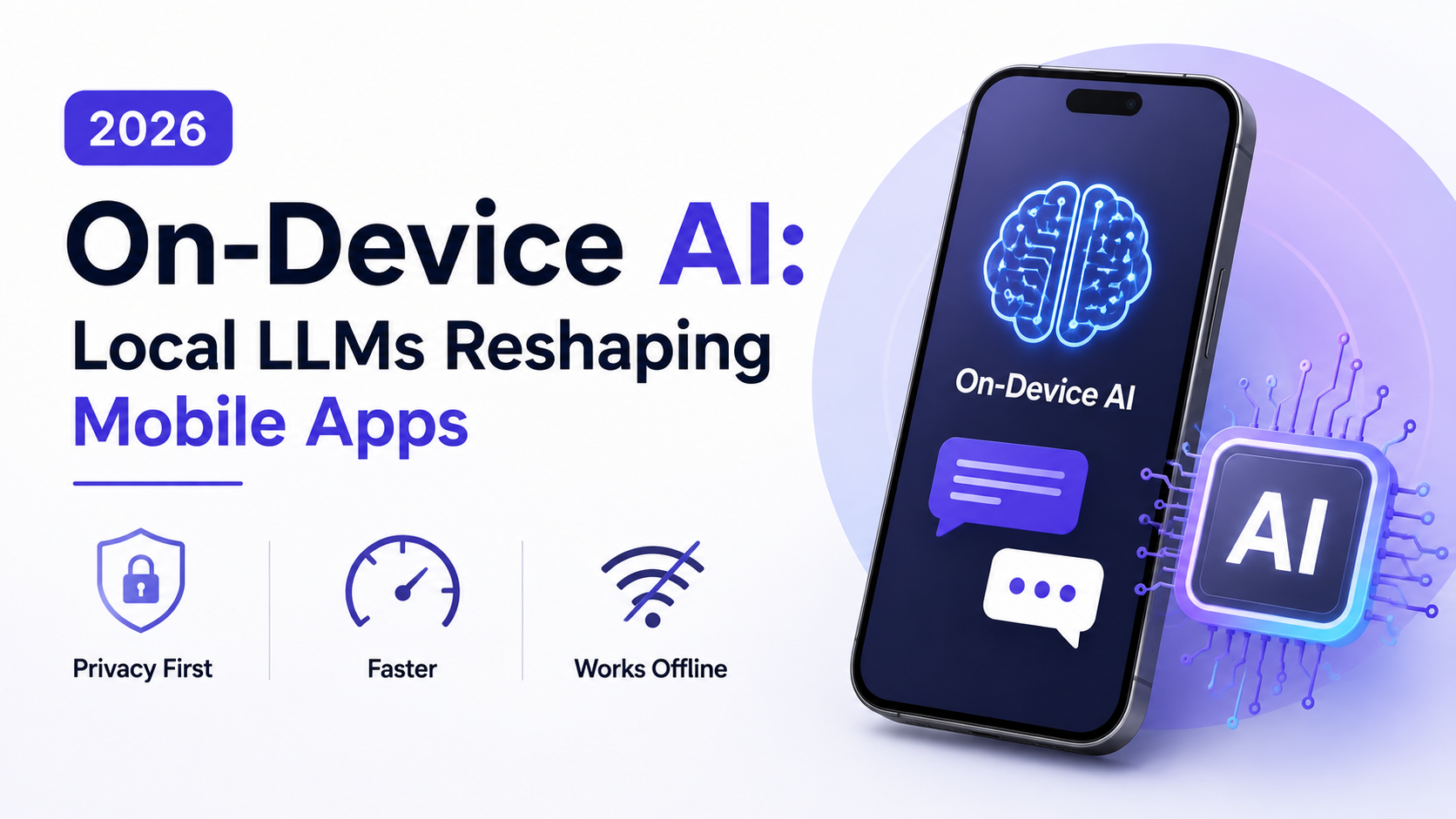
On-device AI will enable sophisticated functionality without network round-trips. Local processing reduces infrastructure energy while improving latency and privacy. Efficient on-device models provide capabilities previously requiring cloud resources.
Battery technology improvements will reduce pressure though won’t eliminate efficiency importance. Larger batteries enable longer use but don’t excuse wasteful applications. Users expect full-day battery life regardless of capacity.
Platform optimizations will automatically improve app efficiency. Operating system energy management, compiler optimizations, and runtime improvements benefit all applications. However, app-level optimization remains necessary for competitive efficiency.
Conclusion
Sustainable mobile development represents convergence of user satisfaction, business value, and environmental responsibility. Energy-efficient applications provide better experiences through extended battery life while reducing carbon footprints through decreased energy consumption.
As environmental consciousness grows and energy costs rise, sustainable development practices transition from optional to essential. Applications ignoring efficiency face user backlash, regulatory pressure, and competitive disadvantage. Those embracing green development position themselves for sustained success in increasingly energy-conscious markets.
Developers, businesses, and users all benefit from efficiency culture treating energy as valuable resource deserving careful management. The mobile future isn’t just feature-rich and fast—it’s sustainable.
Discover more sustainable development practices and mobile optimization techniques on AppsMirror.