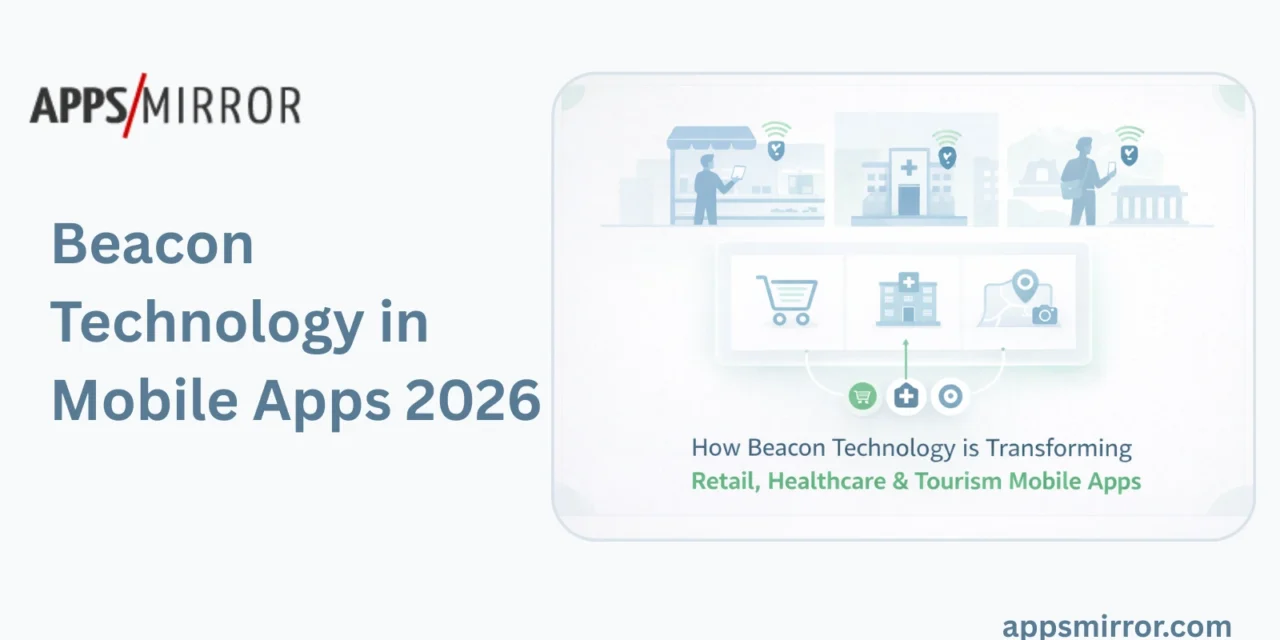
The retail landscape is experiencing a dramatic transformation as beacon technology reshapes how businesses connect with customers through mobile applications. With the global beacon market projected to surge from $1.36 billion in 2018 to an astounding $231.36 billion by 2031, this proximity marketing innovation is no longer experimental—it’s becoming essential infrastructure for location-aware mobile experiences.
Understanding Beacon Technology Fundamentals
Beacons are small wireless devices using Bluetooth Low Energy signals to communicate with nearby smartphones and tablets. Unlike GPS which provides general location data, beacons deliver pinpoint accuracy within specific indoor environments where GPS signals fail. A retail store can detect when customers enter, which aisles they browse, how long they linger near products, and when they approach checkout.
The technology operates through simple yet powerful mechanics. Beacons continuously broadcast unique identification signals that compatible mobile applications detect. When apps recognize these signals, they trigger predefined actions—displaying promotional offers, providing product information, sending navigation assistance, or recording analytics about customer movement patterns.
Three beacon types serve different deployment scenarios. iBeacon, Apple’s protocol, dominates iOS ecosystems with seamless integration into iPhone and iPad applications. Eddystone, Google’s open-source alternative, provides cross-platform compatibility while enabling additional capabilities like broadcasting URLs directly to devices. AltBeacon offers another open standard focused on retail and enterprise deployments requiring vendor independence.
Retail Applications Transforming Shopping Experiences
Physical retailers leverage beacon technology to bridge digital and in-store experiences, creating omnichannel strategies that recognize customers across touchpoints. When shoppers with retailer apps enter stores, beacons trigger personalized welcome messages, highlight ongoing promotions, and surface product recommendations based on purchase history.
Proximity marketing delivers contextual offers at precisely the right moment. As customers approach specific product displays, beacons activate notifications about relevant discounts, product specifications, customer reviews, or complementary items. This targeted approach achieves conversion rates dramatically higher than generic marketing while respecting customer preferences through opt-in app permissions.
Navigation assistance solves one of physical retail’s persistent challenges—helping customers find products in large stores. Beacon-enabled wayfinding guides shoppers directly to items on their lists, suggests optimal routes through stores, and even locates associates who can provide personalized assistance. Museums and airports similarly use indoor navigation to enhance visitor experiences.
Checkout optimization represents another compelling use case. Retailers detect when customers enter checkout areas and can offer mobile payment options, apply digital coupons automatically, or direct shoppers to shorter lines. Some implementations enable entirely app-based checkout where customers scan items while shopping and simply walk out, with payment processing automatically.
For iPhone and Android app developers, beacon integration opens new possibilities for creating engaging retail experiences that drive foot traffic and increase sales.
Beyond Retail: Healthcare and Tourism Innovations
Healthcare facilities implement beacon systems transforming patient experiences and operational efficiency. Hospitals guide patients to appointments through complex buildings, reducing stress and late arrivals. Beacons track medical equipment location in real-time, ensuring critical devices are available when needed. Patient monitoring applications receive proximity alerts when individuals with specific conditions move outside designated areas.
Medication management improves through beacon-equipped pill dispensers that remind patients when doses are due and confirm when medications are taken. Healthcare providers gain valuable compliance data while patients benefit from personalized reminders tied to their actual proximity to medication rather than arbitrary time schedules.
Tourism applications create rich, location-aware experiences at museums, historical sites, and cultural attractions. As visitors approach exhibits, apps automatically present relevant information, audio guides, video content, or augmented reality overlays. This creates self-guided tours rivaling professional guides while allowing visitors to explore at their own pace.
Event venues use beacons for attendee engagement, providing schedules, session information, networking opportunities, and real-time updates based on where attendees are within facilities. Conference apps suggest relevant sessions, facilitate introductions between attendees with shared interests, and even gamify events through location-based challenges.
Technical Implementation Considerations
Successful beacon deployments require careful planning addressing multiple technical and strategic factors. Beacon placement determines effectiveness—devices must be positioned to provide accurate proximity detection without creating dead zones or signal overlap causing confusion. Retail installations typically require extensive testing to optimize beacon density and positioning for specific store layouts.
Battery life management affects deployment viability. Modern beacons operate for years on single batteries when configured appropriately, but aggressive broadcasting frequencies drain power quickly. Balancing signal strength, broadcast intervals, and battery longevity requires understanding specific use case requirements and user behavior patterns.
Privacy concerns demand thoughtful implementation respecting user preferences and regulatory requirements. Beacon technology itself doesn’t track individuals—mobile applications detect beacons, not the reverse—but the data apps collect based on beacon interactions requires responsible handling. Transparent privacy policies, opt-in permissions, and clear value propositions build trust essential for adoption.
Cross-platform compatibility challenges developers supporting both iOS and Android users. While iBeacon and Eddystone protocols enable multi-platform deployments, subtle implementation differences require testing across devices. Progressive web apps offer potential alternatives for beacon experiences accessible without native app installations.
Data Analytics and Customer Insights
Beacon technology generates rich analytics transforming how businesses understand customer behavior. Heat mapping reveals which store areas attract attention and which are ignored, informing layout optimization and product placement strategies. Dwell time analysis identifies engaging displays versus those customers quickly bypass.
Customer journey mapping traces paths through physical spaces, revealing common navigation patterns, bottlenecks causing frustration, and opportunities for strategic product placement. Retailers optimize floor plans based on actual movement data rather than assumptions about how customers shop.
Conversion attribution becomes possible when beacon data connects in-store behavior to purchases. Businesses measure which promotions, displays, or experiences drive sales, enabling data-driven marketing optimization. A/B testing extends into physical environments as different beacon-triggered experiences are compared for effectiveness.
Staffing optimization benefits from traffic analytics showing busy periods requiring additional associates versus slow times when fewer employees suffice. This data-driven scheduling improves customer service while controlling labor costs.
Emerging Trends and Future Developments
Bluetooth 5.0 and newer standards enhance beacon capabilities through extended range, increased data capacity, and improved coexistence with other wireless technologies. These advancements enable richer beacon-triggered experiences and more sophisticated location detection in complex environments.
Integration with artificial intelligence creates predictive experiences where apps anticipate customer needs based on historical behavior patterns and current context. Machine learning algorithms identify optimal moments for promotional messages, personalized recommendations that drive engagement, and service offerings aligned with individual preferences.
Augmented reality combinations create immersive experiences activated by beacon proximity. Museum visitors point devices at exhibits to see historical reconstructions, product demonstrations come alive in retail settings, and maintenance workers view equipment specifications overlaid on physical machinery.
Voice integration enables hands-free beacon experiences where spoken commands trigger actions based on location. Warehouse workers receive picking instructions through earpieces as they approach storage locations, while visually impaired individuals navigate spaces through audio guidance activated by beacon proximity.
Implementation Best Practices
Organizations deploying beacon systems should start with clearly defined objectives and success metrics. Vague goals like “enhancing customer experience” lack the specificity needed to guide implementation decisions and measure results. Concrete objectives such as “increase average transaction size by 15%” or “reduce customer service inquiries by 25%” enable focused deployments and meaningful evaluation.
Pilot programs test assumptions before full-scale rollouts committing significant resources. Small beacon deployments in limited areas reveal technical challenges, user reactions, and operational requirements that might not be obvious in planning stages. Lessons learned from pilots inform broader implementations, avoiding costly mistakes.
User education determines adoption rates for beacon-enabled experiences. Customers won’t benefit from features they don’t know exist, so clear communication about app capabilities and value propositions is essential. In-store signage, staff training, and digital marketing should highlight beacon features encouraging app downloads and permission grants.
Continuous optimization treats beacon deployments as ongoing processes rather than one-time projects. Regular analysis of engagement metrics, user feedback, and business outcomes guides refinements improving effectiveness over time. Technologies, customer expectations, and competitive landscapes evolve, requiring adaptive approaches maintaining relevance.
Overcoming Adoption Barriers
Permission fatigue challenges beacon implementations as users become cautious about granting location access and enabling Bluetooth. Apps must clearly articulate value propositions justifying these permissions while respecting user privacy. Beacon experiences should enhance rather than interrupt, building positive associations encouraging ongoing engagement.
Battery drain concerns can deter users from enabling Bluetooth continuously. Modern Bluetooth Low Energy protocols minimize power consumption, but educating users about negligible battery impact requires clear communication and demonstrable evidence dispelling outdated perceptions.
App installation requirements create friction for potential users unwilling to download applications for single-visit experiences. Progressive web apps and QR code alternatives provide beacon-like capabilities without mandatory installations, though with some functionality limitations compared to native implementations.
The Beacon-Enabled Future
Beacon technology maturation transforms it from novelty into foundational infrastructure for location-aware mobile experiences. As deployment costs decrease, capabilities expand, and user familiarity grows, beacon integration becomes standard rather than differentiating feature for forward-thinking organizations.
The convergence of beacons with other technologies including AI, AR, and 5G networks creates compound benefits exceeding what isolated implementations achieve. These synergies enable experiences previously impossible, fundamentally changing how businesses interact with customers in physical spaces.
For mobile app developers and businesses alike, understanding and implementing beacon technology now positions them advantageously as proximity marketing and location-based services become expectations rather than luxuries in customer experiences.
Explore more about mobile app innovations and technology trends shaping the future of mobile experiences on AppsMirror.