
Clinical documentation forms the backbone of quality dental care. Comprehensive records support clinical decision-making, protect practices legally, and ensure continuity across multiple providers. While these functions remain constant, the methods for managing medical records have transformed dramatically with electronic systems replacing paper charts.
Evolution from Paper to Digital
Traditional paper charts served dentistry adequately for decades but carried inherent limitations. Physical records could only exist in one location at a time, complicating multi-location practices and preventing remote access. Handwriting legibility challenges created interpretation difficulties. Physical storage consumed valuable office space while remaining vulnerable to damage from fires, floods, or simple deterioration.
The dental EMR system within DentalPro Cloud eliminates these constraints through cloud-based digital records accessible anywhere with internet connectivity. Multiple users can view records simultaneously without physical file sharing. Storage costs disappear while security improves through encryption and access controls.
Core EMR Components
Comprehensive electronic medical records encompass multiple data types organized for efficient access and use. Patient demographics, medical histories, treatment records, diagnostic images, financial information, and communication histories all integrate within unified systems.
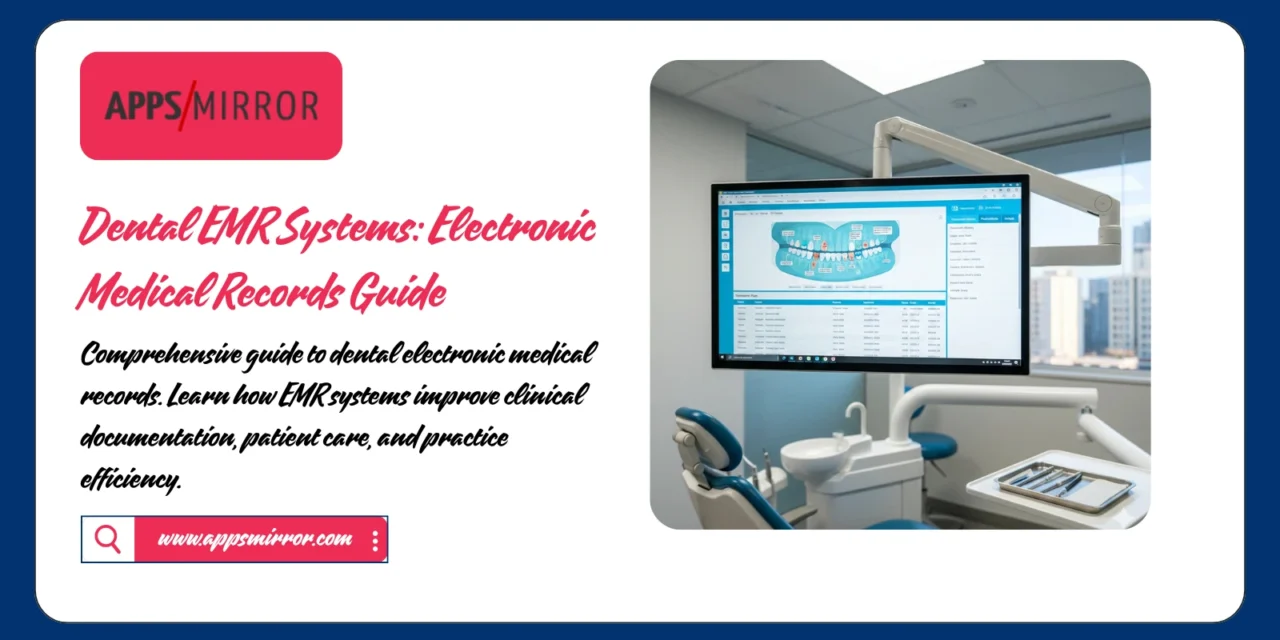
Dental-specific charting tools provide visual tooth diagrams supporting periodontal measurements, restorative notations, and pathology documentation. These graphical interfaces mirror traditional paper charting methods, minimizing learning curves while providing advantages impossible with paper, such as color-coding, automated progress tracking, and instant history comparisons.
Treatment planning modules allow dentists to propose comprehensive care plans with procedure sequences, estimated costs, and alternative options. These plans integrate with smart booking systems for automated appointment scheduling aligned with treatment sequences.
Clinical Documentation Efficiency
EMR systems dramatically reduce charting time through templates, macros, and auto-population features. Common procedures have predefined templates requiring only minor customization for individual cases. This standardization improves documentation consistency while accelerating data entry.
Integration with AI documentation capabilities further accelerates charting through voice recognition and intelligent note generation. Dentists speak naturally while the system converts speech to structured records, eliminating typing almost entirely.
Auto-population pulls data from previous visits, eliminating repetitive entries for stable information like medical histories or medication lists. Staff update only changed information rather than recreating complete records at each appointment.
Imaging Integration
Modern dental practices generate extensive digital imaging including radiographs, intraoral photos, and CBCT scans. EMR systems must integrate these images seamlessly with clinical records for comprehensive documentation.
Embedded image viewers allow providers to review radiographs within charting screens without opening separate applications. Annotation tools enable marking pathology or measurements directly on images. Side-by-side comparison views support progress monitoring across multiple appointments.
Image archiving within EMRs eliminates physical film storage while ensuring images remain accessible indefinitely. Cloud storage provides redundancy protecting against data loss from hardware failures or local disasters.
Clinical Decision Support
Advanced EMR systems provide clinical decision support helping providers deliver evidence-based care. Drug interaction checking alerts prescribers to potential medication conflicts. Allergy warnings prevent prescribing medications to sensitive patients. Clinical guidelines embedded in documentation screens offer procedure-specific recommendations.
Risk assessment tools analyze patient data identifying individuals at elevated risk for conditions like periodontal disease or oral cancer. These assessments support preventive care strategies and intensive monitoring for high-risk patients.
Integration with digital prescription systems ensures prescribing decisions consider complete medication histories, renal function, and other factors affecting pharmacotherapy appropriateness.
Regulatory Compliance and Meaningful Use
Healthcare regulations increasingly mandate electronic health record adoption and meaningful use. Insurance programs offer financial incentives for practices demonstrating appropriate EHR utilization. Regulatory compliance requires specific functionality including prescription tracking, quality reporting, and secure patient data exchange.
Certified EMR systems meet regulatory requirements, protecting practices from penalties while positioning them for available incentives. The comprehensive service offerings include compliance support ensuring practices maintain adherence to evolving regulations.
Patient Portal Integration
Modern EMRs include patient portal functionality enabling patients to access portions of their medical records online. Patients can review treatment histories, view diagnostic images, access educational materials, and communicate with practices through secure messaging.
Portal integration with WhatsApp communication features provides flexible patient engagement options. Some patients prefer formal portals while others appreciate WhatsApp convenience for quick questions or appointment management.
Patient access to records improves engagement and treatment plan adherence. When patients can review dentist recommendations at home, they make more informed decisions and better understand proposed treatments.
Multi-Provider Coordination
Group practices benefit significantly from unified EMR systems. All providers access identical patient information regardless of which dentist delivered previous care. This consistency supports quality care even when patients see different providers due to scheduling or preference changes.
Consultation notes allow specialists to communicate findings to referring dentists within patient charts. This integration ensures referral loops close properly with specialists reporting back to primary dental homes.
The modern dental practice model emphasizes team-based care with hygienists, assistants, and dentists collaborating through shared information access. EMR systems support this collaboration through real-time record updates visible to all authorized team members.
Quality Improvement and Analytics
EMR data supports quality improvement initiatives through outcome tracking and pattern analysis. Practices can identify complications rates for specific procedures, track patient satisfaction scores, and monitor treatment plan acceptance rates.
Aggregated data reveals practice patterns informing strategic decisions. Which procedures generate highest margins? What patient demographics respond best to specific marketing? How do individual providers compare on key metrics? These insights drive continuous improvement and strategic growth.
Dental-Specific Functionality
General medical EMRs fail to address dental-specific needs adequately. Dental EMR systems must support periodontal charting, tooth numbering systems, endodontic documentation, orthodontic treatment tracking, and other specialty-specific requirements.
Odontograms provide visual tooth charts supporting intuitive documentation. Color-coded graphics indicate existing restorations, proposed treatments, and completed work. These visualizations communicate complex treatment information more effectively than text descriptions.
Periodontal charting tools record probing depths, recession, bleeding, and mobility measurements. Automated calculations generate periodontal diagnoses based on measured data, supporting consistent diagnostic criteria across providers.
Billing Integration
Clinical documentation must integrate tightly with billing systems for efficient revenue cycle management. Procedures documented clinically should automatically generate billing codes, eliminating duplicate data entry and reducing coding errors.
Treatment estimate generation pulls documented procedure codes with associated fees. Patients receive accurate cost information before treatment begins, improving financial transparency and reducing surprise bills affecting satisfaction.
Insurance claim generation draws documented procedures and diagnoses directly from clinical records. This integration improves claim accuracy while reducing submission time from days to minutes.
Mobile Access and Flexibility
Cloud-based EMRs enable access from tablets, smartphones, and laptops beyond traditional desktop workstations. This flexibility supports various practice workflows and provider preferences.
Dentists can review records from home when patients call with questions. Multi-location practitioners access complete information at every practice site. Traveling specialists consult with referring dentists through mobile record access.
Data Migration and System Transitions
Practices transitioning from paper records or legacy software face data migration challenges. Modern EMR implementations include data conversion services transferring historical records to new systems.
Migration completeness varies based on source data structure and quality. Well-organized legacy data transfers more completely than disorganized paper records requiring manual scanning and indexing.
Experience EMR functionality firsthand through demonstrations showing actual charting workflows and record navigation. The complete platform extends far beyond clinical documentation to encompass comprehensive practice management.
Security and Disaster Recovery
Electronic records require robust security protecting against unauthorized access, data breaches, and system failures. Encryption, access controls, audit logging, and regular security assessments protect patient information.
Cloud-based systems provide superior disaster recovery compared to local servers. Redundant data centers ensure access continuity even during local power outages or natural disasters. Automatic backups prevent data loss from hardware failures.
Training and Change Management
Successful EMR adoption requires comprehensive training and thoughtful change management. Staff and providers need adequate time learning new systems before launching clinically. Ongoing support and advanced training maximize long-term system utilization.
Super-users within practices serve as first-line support resources, reducing vendor support ticket volumes while building internal expertise. These champions also advocate for continued system use during the challenging adjustment period following initial implementation.
Measuring EMR Success
Key performance indicators help practices assess EMR implementation success. Documentation time per appointment, chart completion rates, billing accuracy, and staff satisfaction scores all provide valuable feedback on system effectiveness.
The comprehensive benefits of integrated management become apparent through measurable improvements across multiple operational dimensions. EMR adoption represents foundational transformation enabling numerous downstream efficiencies.
Conclusion
Electronic medical records transform clinical documentation from burdensome administrative requirements into strategic assets supporting quality care, operational efficiency, and practice growth. Modern dental EMR systems provide specialty-specific functionality while integrating with comprehensive practice management platforms. Practices adopting robust EMR solutions position themselves for success in increasingly digital healthcare environments requiring clinical excellence, regulatory compliance, and operational efficiency.