The way we interact with mobile devices is undergoing a fundamental transformation. While touchscreens revolutionized smartphones in 2007, a new interface paradigm is emerging—one where physical contact becomes optional rather than mandatory. Touchless interfaces using voice, gestures, facial recognition, and eye tracking are moving from experimental features to mainstream expectations, driven by both technological advancement and post-pandemic hygiene consciousness.
The Touchless Interface Evolution
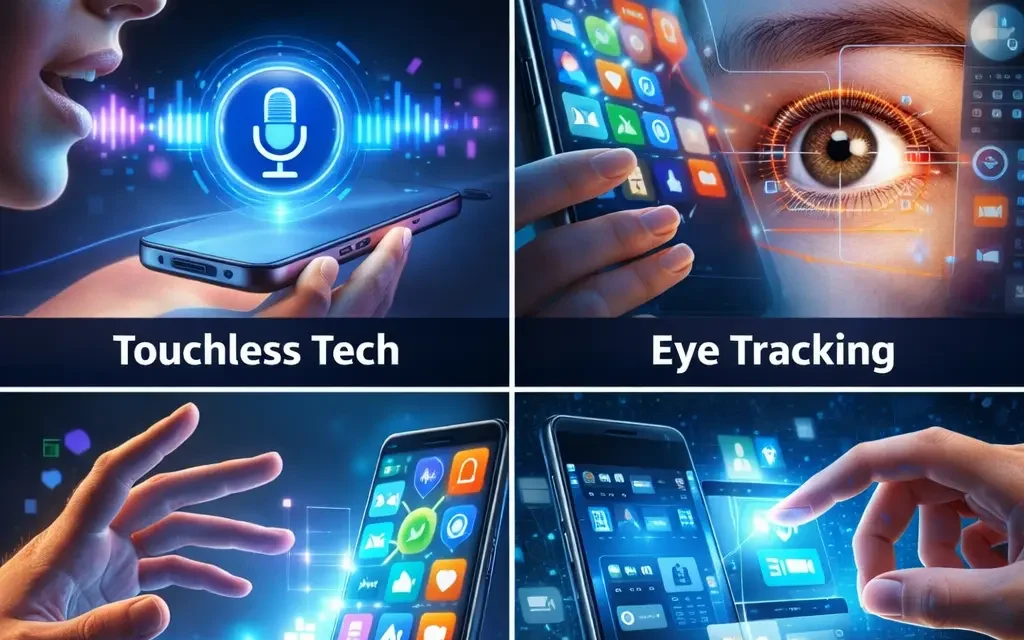
Touchless user interfaces enable device control without physical contact through various technologies. Voice commands let users operate smartphones hands-free, gestures in the air trigger actions without touching screens, facial expressions navigate menus, and eye movements select items. These seemingly futuristic capabilities are rapidly becoming practical realities across consumer devices.
The COVID-19 pandemic accelerated touchless technology adoption as public health concerns made shared touchscreens seem unhygienic. Research shows that 43% of consumers now prefer touchless options for public interfaces, a dramatic shift from pre-pandemic attitudes. This preference extends beyond public terminals into personal device use as people appreciate touchless convenience for situations where hands are dirty, gloved, or occupied.
Multiple technologies enable touchless interactions. Voice recognition powered by advanced natural language processing understands conversational commands rather than requiring rigid syntax. Gesture recognition uses device cameras and sensors to detect hand movements, head nods, or body language. Facial recognition identifies users and interprets expressions for interface control. Eye tracking follows gaze patterns enabling selection through looking rather than touching.
The technology convergence creates multimodal interfaces combining multiple input methods. Users might voice-activate apps, gesture-navigate content, and eye-select specific items within single workflows. This flexibility accommodates varying situations, accessibility needs, and personal preferences while providing redundancy when one method proves impractical.
Healthcare Applications Leading Adoption
Healthcare environments demonstrate touchless interfaces’ most compelling applications. Surgeons access medical imaging, patient records, and procedure documentation without contaminating sterile fields. Voice commands retrieve information, gesture controls zoom and rotate 3D scans, and eye tracking navigates through extensive data without breaking concentration or compromising sterility.
Telemedicine platforms incorporate touchless controls enabling elderly or mobility-impaired patients to conduct video consultations without complex device manipulation. Voice commands adjust volumes, gestures accept calls, and automated systems handle most interactions requiring minimal technical proficiency. This accessibility proves critical for populations who struggle with traditional touchscreen interfaces.
Patient monitoring systems use touchless interfaces for data access in isolation units where minimizing physical contact reduces infection transmission risks. Healthcare workers review vital signs, adjust equipment settings, and document observations through voice and gesture rather than touching potentially contaminated surfaces.
Mental health applications experiment with emotion recognition analyzing facial expressions and voice tones to assess patient states. While privacy and accuracy concerns require careful implementation, the potential for continuous passive monitoring providing early intervention opportunities proves attractive for conditions including depression and anxiety.
The development of healthcare iPhone and Android applications with touchless capabilities expands access to these innovations across platforms.
Automotive Integration and Safety
Automotive environments represent ideal touchless interface applications where hands-free operation enhances safety by keeping drivers’ attention on roads. Voice assistants enable navigation adjustment, music control, climate settings, and phone calls without manual screen interaction. Modern implementations understand natural language making commands feel conversational rather than robotic.
Gesture controls allow drivers to accept calls with hand waves, dismiss notifications with swipes, or adjust volumes through rotating motions—all without looking away from roads. BMW, Mercedes, and other manufacturers integrate sophisticated gesture recognition into premium vehicles, a feature expanding to mainstream models.
Eye tracking systems detect driver distraction or drowsiness, issuing alerts when attention wanders from roads. Advanced implementations enable interface control through gaze direction, selecting menu items by looking at them rather than touching screens. While still emerging, this technology promises to minimize distraction further by eliminating even brief glances required for touch interaction.
Safety implications extend beyond convenience. Studies show that voice commands, while not eliminating distraction entirely, prove significantly less dangerous than manual phone interaction. Gesture controls similarly reduce cognitive load compared to precise touchscreen manipulation while driving. As autonomous vehicles evolve, touchless interfaces will become primary human-vehicle communication methods.
Retail and Public Kiosk Applications
Retail environments adopt touchless kiosks addressing hygiene concerns while improving customer experiences. Shoppers access product information, check prices, and complete purchases through voice commands and gesture controls. This contactless approach proves particularly valuable in food service where touching screens between handling food seems unhygienic.
Virtual try-on experiences use gesture controls and facial recognition enabling customers to preview products without physical contact. Fashion retailers let shoppers virtually try clothing items, cosmetics brands show makeup application, and furniture stores demonstrate products in home settings—all through touchless augmented reality interfaces.
Self-checkout systems incorporate touchless payment and navigation reducing contact points throughout shopping experiences. Customers scan items through camera recognition, confirm purchases through voice, and complete payment via contactless cards or mobile wallets. The entirely touchless transaction flow addresses both efficiency and safety priorities.
Public information kiosks in airports, museums, and transit systems implement touchless controls recognizing that hundreds of people touching same screens creates disease transmission risks. Travelers check flight information, museum visitors access exhibits details, and transit users plan routes without physical contact.
Accessibility Breakthroughs
Touchless interfaces provide transformative accessibility improvements for individuals with mobility limitations, motor control challenges, or other disabilities making traditional touchscreens difficult. Voice control enables complete device operation for users unable to physically manipulate smartphones. Gesture recognition accommodates those who can move but struggle with precise touch targets. Eye tracking serves users with extremely limited mobility.
These technologies succeed where previous accessibility solutions often fell short. Specialized adaptive equipment proves expensive and requires configuration expertise. Touchless interfaces built into mainstream devices avoid stigmatization associated with adaptive technology while eliminating additional equipment costs. The democratization of accessibility through mainstream feature integration represents significant progress.
Elderly users who struggle with small touchscreen targets benefit from voice and gesture alternatives requiring less precision. This population’s growing smartphone adoption accelerates as interfaces accommodate age-related dexterity and vision changes. Family members appreciate technologies making device use easier for aging relatives maintaining independence.
Children with developmental disabilities access educational content through interfaces matching their capabilities. Touch-averse individuals use gesture controls, non-verbal children employ eye tracking, and those with attention challenges benefit from multimodal options accommodating their learning styles.
Technical Implementation Challenges
Accuracy remains the primary touchless interface challenge. Voice recognition struggles with accents, background noise, and similar-sounding commands. Gesture recognition mistakes unintentional movements for commands or fails to detect intended gestures consistently. Eye tracking faces calibration challenges and struggles with glasses, contacts, or varying lighting conditions.
Processing requirements stress mobile hardware as real-time gesture and facial recognition demand substantial computational power. While modern smartphones handle these workloads increasingly efficiently, battery impact remains noticeable during extended touchless interface use. Optimization continues improving efficiency, but physics of real-time video processing and machine learning inference impose fundamental constraints.
Privacy concerns emerge as touchless interfaces require cameras and microphones remaining active. Users worry about surveillance or data collection as devices constantly watch and listen for commands. Transparent policies, on-device processing, and clear activation indicators help address concerns, though trust remains challenge for widespread adoption.
Learning curves frustrate users accustomed to touchscreen precision. Touchless commands lack the direct manipulation feedback making touchscreens intuitive. Users must learn which gestures trigger which actions, memorize voice commands, and understand system capabilities. Effective implementations balance capability with discoverability ensuring users can access features without extensive training.
Security and Authentication
Biometric authentication through facial recognition and voice verification provides touchless login alternatives to passwords and fingerprints. These methods offer comparable security while eliminating physical contact requirements. Face ID and similar systems achieve acceptable accuracy for consumer applications, though vulnerability to sophisticated spoofing attacks remains concern for high-security contexts.
Voice biometrics analyze unique vocal characteristics for identity verification. While convenient for hands-free authentication, voice systems face challenges from recordings, impersonation attempts, and voice changes from illness or aging. Multimodal authentication combining voice with other factors improves security without sacrificing convenience entirely.
Liveness detection prevents spoofing through photographs or masks by requiring real-time interaction during authentication. Advanced implementations detect subtle movements, analyze depth information, or request specific actions proving authentic physical presence. These countermeasures stay ahead of increasingly sophisticated attack methods, though arms races between security and spoofing continue.
Future Innovations
Brain-computer interfaces represent ultimate touchless control, translating thoughts directly into device commands. While current implementations require invasive hardware unsuitable for consumer applications, non-invasive approaches using EEG headsets show promise for future mainstream adoption. Controlling devices through thought alone would eliminate all physical interaction requirements.
Haptic feedback innovations create tactile sensations without physical contact through ultrasound or air pressure. These technologies provide confirmation signals for touchless commands, addressing missing physical feedback that makes current implementations feel uncertain. Users would “feel” virtual buttons hanging in mid-air, combining touchless benefits with tactile reassurance.
Environmental sensing enables context-aware interfaces automatically adapting based on situations. Devices might shift to voice-primary operation when detecting users cooking, switch to gesture control during video calls avoiding audio interruption, or employ eye tracking when recognizing users in meetings requiring discretion.
Neural networks will improve recognition accuracy across modalities as training datasets expand and algorithms advance. Machine learning personalization will adapt to individual speech patterns, gesture styles, and preferences creating increasingly natural-feeling interactions requiring less conscious adjustment to technology limitations.
Hybrid Interface Design
Optimal implementations combine touchless and touch inputs rather than forcing exclusive reliance on either. Users need fallback options when voice proves impractical in quiet libraries, when gestures fail in cramped spaces, or when touchless simply feels inappropriate for tasks requiring precision.
Contextual adaptation automatically selects appropriate input methods. Apps might default to voice control during driving, gesture when hands are dirty, touch when precision matters, and eye tracking for accessibility needs. This intelligent selection reduces cognitive burden of choosing methods while ensuring effective interaction across situations.
Progressive disclosure introduces touchless capabilities gradually as users demonstrate readiness. New users receive traditional touch interfaces with optional touchless alternatives. As proficiency develops, apps can suggest touchless methods for appropriate contexts, eventually shifting toward touchless-primary operation for users preferring it.
User Experience Considerations
Discoverability challenges plague touchless interfaces lacking visual menus showing available commands. Users don’t know possible gestures, available voice commands, or system capabilities without explicit instruction. Effective implementations provide easy-to-access command references, contextual hints, and tutorial modes teaching interaction methods.
Error recovery must gracefully handle inevitable recognition mistakes. When systems misunderstand commands, users need simple correction methods avoiding frustration. Voice interfaces should confirm important actions, gesture systems should provide undo options, and all modalities should make correction easier than living with errors.
Feedback mechanisms confirm recognition even when actions haven’t completed. Visual indicators, audio cues, or haptic responses assure users that commands registered preventing repeated attempts compounding errors. Clear system state communication helps users understand whether delays indicate processing or non-recognition.
Conclusion
Touchless user interfaces represent more than pandemic responses—they’re natural evolution of human-computer interaction toward more intuitive, accessible, and flexible methods. The convergence of advanced sensors, processing power, and machine learning makes previously impractical technologies viable for mainstream adoption.
As touchless capabilities mature and expand across devices, they won’t replace touch entirely but rather complement it. The future of mobile interaction is multimodal, with users fluidly switching between methods matching situations, preferences, and needs. Applications embracing this diversity while providing thoughtful implementations will define next-generation user experiences.
Discover more interface innovations and mobile technology trends on AppsMirror.