
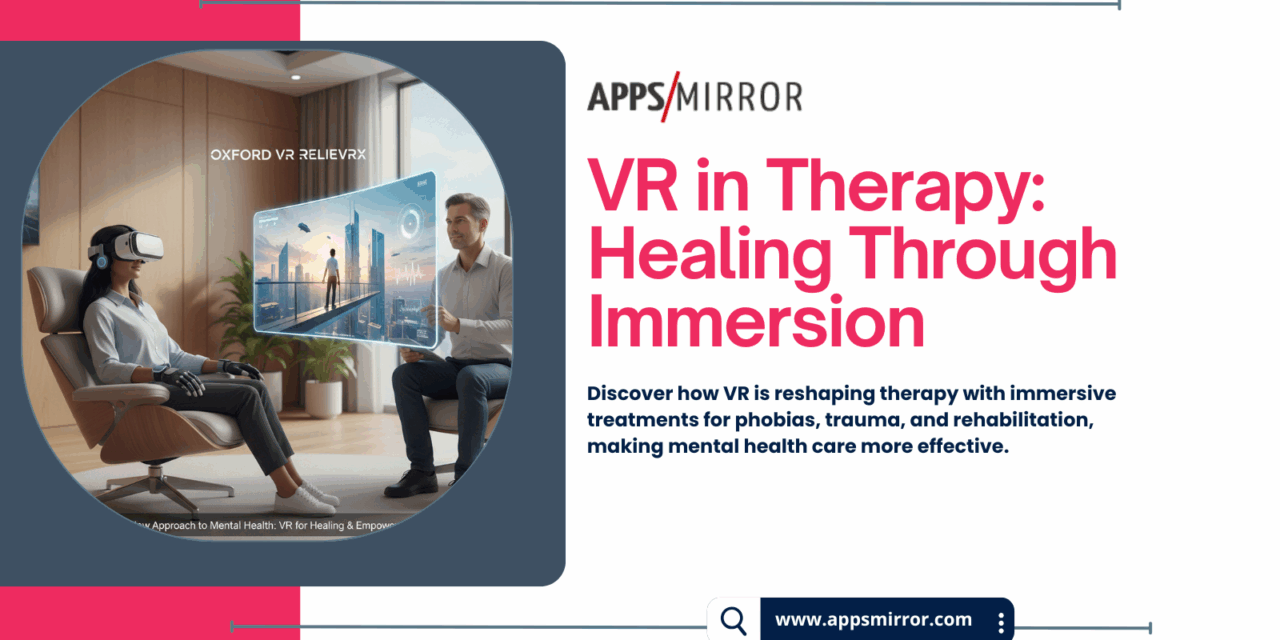
A New Approach to Mental Health
For decades, therapy mainly meant face-to-face conversations between a patient and their counselor. Virtual Reality (VR) is now revolutionizing mental health care by adding an immersive and interactive dimension, with research programs such as Oxford VR’s automated treatments for conditions like agoraphobia and paranoia showing promising results. Through controlled virtual environments, therapists can help patients safely face fears, manage pain, and recover from trauma in ways that were once unimaginable.
VR in therapy isn’t just about advanced headsets—it’s about transforming how people experience healing. For those who find conventional methods challenging, VR brings therapy to life, promoting recovery through guided, realistic experiences rather than abstract discussions.
Facing Fears Safely
Exposure therapy—helping patients gradually confront their fears—is a cornerstone of treating phobias and anxiety. Yet, it is often difficult or unsafe to recreate fear-inducing situations like flying or heights in real life.
VR solves that problem. A person afraid of heights, for example, can enter a virtual high-rise or bridge scenario similar to those used in clinical trials at the University of Oxford, which demonstrated significant reductions in acrophobia symptoms using VR exposure. Systematic reviews also show that Virtual Reality Exposure Therapy (VRET) can be as effective as traditional in‑person exposure for many phobias, making it a credible tool for modern anxiety treatment.
Healing Trauma Through Immersion
PTSD (Post-Traumatic Stress Disorder) remains one of the most complex mental health conditions to treat. Virtual reality has become a powerful tool here, allowing patients to process traumatic events within carefully controlled virtual settings that can be tailored to their experiences.
Clinical research has found that VR-based exposure can reduce PTSD symptoms in veterans and trauma survivors by recreating relevant scenarios in a safe environment, helping them work through triggers more progressively. These immersive approaches extend traditional trauma-focused therapies and are increasingly explored in academic and clinical centers worldwide.
Managing Pain and Rehabilitation
The benefits of VR extend beyond mental health. In pain management, companies such as AppliedVR have developed FDA-authorized VR therapeutics like RelieVRx (formerly EaseVRx) for chronic lower back pain, demonstrating that immersive content can reduce pain intensity when used alongside standard care.
In physical rehabilitation, VR games and simulations help stroke survivors and other patients practice movement and coordination in motivating, gamified environments. Research and commercial platforms show that this kind of engagement can improve adherence to rehab programs, making exercises feel more like interactive challenges than repetitive tasks.
The Benefits and Challenges
Merits:
-
Enables safe and controlled exposure for phobia and trauma therapy, with meta-analyses supporting its effectiveness for multiple anxiety disorders.
-
Makes therapy sessions interactive and engaging, particularly for younger or tech‑comfortable users.
-
Reduces pain perception during medical procedures and chronic pain treatment, as shown in clinical evaluations of devices like RelieVRx.
-
Improves motivation in physical rehabilitation through gamified tasks and immersive feedback.
Demerits:
-
High equipment and software costs can limit accessibility for smaller clinics or individual practitioners.
-
Therapists need specialized training and implementation guidelines to use VR safely and effectively in practice.
-
There is a risk of over‑reliance on technology instead of addressing underlying psychological or social factors.
-
Some users may experience motion sickness or discomfort, requiring careful selection and adjustment of VR content.
VR should be viewed as a complement—not a replacement—for traditional therapy.
Leaders in VR Therapy Innovation
Several organizations and platforms are shaping this growing field. Oxford VR, for example, develops automated cognitive therapy programs for issues like agoraphobia and social engagement, many of which are described on its project pages. Other solutions such as oVRcome offer smartphone-based VR exposure tools for phobias and social anxiety, making VRET more accessible outside specialist clinics.
In pain management, AppliedVR’s RelieVRx stands out as the first at‑home immersive VR pain treatment authorized by the FDA for chronic lower back pain. Alongside these commercial efforts, academic reviews and guidelines provide best practices for implementing VR safely and effectively in clinical settings.
The Future of VR Therapy
As VR hardware becomes more affordable, remote and home-based therapy could expand significantly, with platforms already offering at‑home exposure or pain management programs under professional guidance. Emerging work is also exploring how biometrics such as heart rate and gaze tracking can be integrated into VR systems to adapt scenarios in real time based on a patient’s stress or engagement levels.
Future systems may combine AI‑driven personalization with evidence-based protocols, creating highly tailored VR therapy journeys that build on existing research into exposure, cognitive restructuring, and behavioral activation. This fusion of empathy, science, and technology points toward a model of mental health care that is more responsive and widely available.
Technology for Good
At its core, VR in therapy is about empowerment and expanding the toolkit available to mental health and rehabilitation professionals. By helping patients overcome fear, pain, and trauma through immersive experiences, VR demonstrates how technology can serve deeply human needs rather than replacing the therapeutic relationship.
From conquering lifelong phobias to easing chronic pain, VR in therapy shows that innovation is not only about entertainment—it is also about healing in more engaging, accessible, and evidence-informed ways