
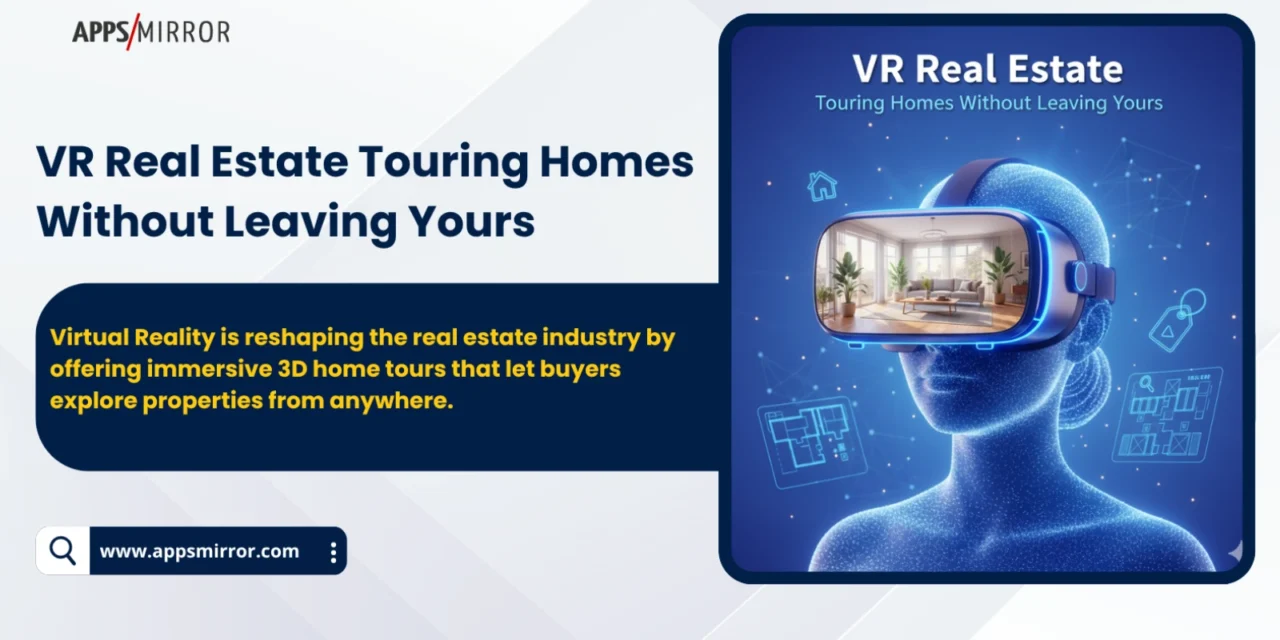
Buying a Home Without Stepping Outside
Traditionally, buying or renting a property meant spending weekends driving across neighborhoods, meeting brokers, and rushing through house tours. Virtual Reality (VR) is changing that entire experience. With a headset or even just a smartphone, you can now step inside a property thousands of miles away and explore every corner as if you were physically there (Matterport VR Tours).
The real estate industry has embraced VR technology not as a gimmick but as a serious tool. Whether it’s showing unfinished apartments, previewing luxury villas to international buyers (Zillow 3D Home Tours), or helping renters save time, VR is making property decisions more informed and more efficient (EyeSpy360 Virtual Tours). Explore more tech innovations on AppsMirror.
The Rise of Virtual Property Tours
Instead of relying on glossy photos or staged videos, VR property tours allow potential buyers to walk through spaces virtually. You can look up at ceilings, peek into closets, or even switch between furnished and unfurnished versions of a home. This immersive experience creates transparency and reduces the chances of disappointment when people finally visit in person (Benefits of Virtual Tours).
Developers also use 3D modeling and visualization to showcase under-construction projects. Instead of asking buyers to trust floor plans, they can immerse themselves in the finished product months or years before it’s ready. This builds confidence and speeds up sales cycles in an industry that often depends on long-term commitments.
Global Reach, Local Comfort
One of the strongest advantages of VR in real estate is accessibility. International investors or relocating families can explore properties without hopping on a plane. A buyer in New York could tour an apartment in Singapore within minutes (Matterport VR Tours).
This also benefits smaller cities where specialized buyers—like retirees or expats—may not live locally. VR makes the property market more inclusive and efficient by reducing the barrier of distance.
Who’s Leading the Way
Several companies are at the forefront of VR adoption in real estate:
-
Matterport – Offers 3D scans of real-world spaces that can be viewed in VR (Matterport Website).
-
Zillow and Realtor.com – Integrated VR tours into their listings (Zillow 3D Home).
-
EyeSpy360 – Provides customizable virtual tours for real estate agents (EyeSpy360 Website).
Developers, architects, and interior designers are equally invested, using VR to help clients visualize changes before construction begins. This collaborative approach ensures fewer surprises and more satisfied buyers.
Benefits That Go Beyond Sales
VR’s value extends past simply showing homes:
-
Saves Time: Buyers and renters can filter out unsuitable properties without multiple physical visits.
-
Cost-Effective: Developers spend less on physical showrooms and sample flats.
-
Enhanced Design Choices: Buyers can test different layouts, furniture, and finishes before making a decision.
-
Inclusive Access: People with disabilities or mobility issues can tour homes virtually without challenges.
Challenges That Remain
Despite its promise, VR in real estate faces challenges:
-
High Setup Costs: Scanning and rendering properties for VR requires investment.
-
Hardware Limitations: Full immersion requires VR headsets, which are still not mainstream.
-
Internet Dependence: High-quality VR tours need strong connectivity.
-
Emotional Gap: Technology cannot fully replicate the feeling of being inside a real home.
Real estate is an emotional decision, and technology should enhance, not replace, that connection.
The Future of Property Hunting
In the near future, VR in real estate will merge with Augmented Reality (AR). Imagine touring a virtual apartment and then overlaying your own furniture using AR. AI will join the mix, recommending properties based on lifestyle preferences and creating personalized virtual tours (Matterport Blog).
Cities might offer virtual previews of neighborhoods, parks, and schools—helping families not just choose a home but also a lifestyle.
Technology for Good
At its core, VR is making real estate more transparent, efficient, and inclusive. Buyers gain confidence, sellers close deals faster, and developers reduce wasted resources. For families, students, retirees, and investors, VR turns a stressful process into an informed and empowering one.
✨ VR is not just about seeing spaces — it’s about reimagining the way we experience home buying.
Read more stories on AppsMirror— your source for the latest in apps, tech, and innovation.