Subscribing to an app used to take a single tap, while cancelling that same subscription often required navigating a maze of confusing menus, hidden cancellation flows, or even a phone call, a deliberate asymmetry that regulators in multiple regions have increasingly identified as a genuine consumer protection problem rather than just an annoying design choice. By 2026, a growing body of regulation, including rules requiring cancellation to be at least as easy as signing up, has begun reshaping how app developers are legally allowed to structure subscription flows, moving the industry away from dark patterns that relied on friction and confusion to reduce cancellations. This shift touches nearly every app that offers a recurring subscription, not just the largest streaming and media platforms most commonly cited in coverage of these changes.
The ‘Click to Cancel’ Requirement
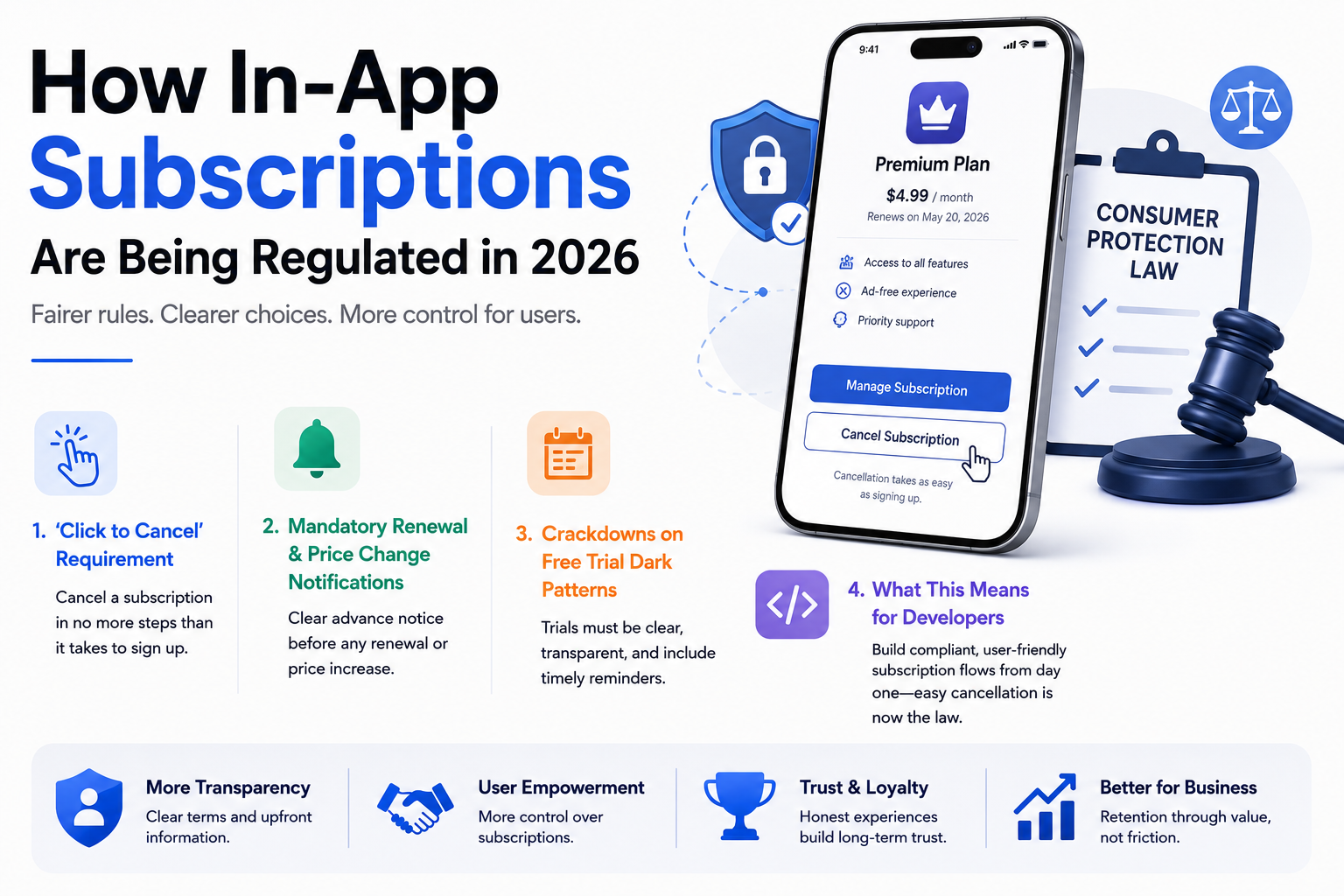
New regulations increasingly require that cancelling a subscription take no more steps than the original sign-up process, directly targeting the historically common practice of requiring a phone call or a hidden multi-step flow specifically to cancel while signup remained a single tap.
Mandatory Renewal and Price Change Notifications
Regulators now increasingly require clear advance notice before an automatic renewal or a price increase takes effect, closing a gap that previously let some apps quietly renew at a higher price without adequately warning the subscriber beforehand.
Crackdowns on Free Trial Dark Patterns
Free trials that silently convert to a paid subscription without a clear, prominent reminder before the charge hits are facing increasing regulatory scrutiny, pushing developers toward more transparent trial-ending notifications delivered with genuine advance warning.
What This Means for App Developers
Developers now need to build subscription cancellation and management flows with genuine compliance in mind from the start, treating easy cancellation as a legal requirement rather than a customer retention risk to be minimized through design friction.
The practical effect for app publishers has been a real shift in how subscription retention gets approached, moving away from relying on cancellation friction toward genuinely earning renewals through product value and clear communication instead, since the friction-based approach is becoming both legally risky and reputationally costly as public awareness of these practices grows. This shift has created real opportunity for apps willing to lean into transparency as a competitive advantage, since a straightforward cancellation process paired with genuinely earned retention increasingly builds more long-term trust than a subscription that’s difficult to escape ever did. Compliance costs have fallen disproportionately on smaller developers without dedicated legal resources, similar to the pattern seen with privacy regulation, pushing some smaller teams toward subscription management platforms that handle compliant cancellation flows automatically rather than building custom flows from scratch. This gap between well-resourced and smaller developers mirrors a broader pattern seen across most recent app-related regulatory changes.
In-app subscription regulation has genuinely shifted incentives away from friction-based retention and toward earning renewals through real product value and honest communication about pricing and trials. Developers who’ve adapted by building genuinely easy cancellation flows and transparent renewal notices are navigating this shift more comfortably than those still relying on the confusing, friction-heavy patterns regulation is increasingly making both risky and unsustainable. The developers who adapt earliest are likely to benefit from the goodwill of being ahead of a change everyone in the industry will eventually have to make anyway, rather than being dragged into compliance reluctantly after facing genuine regulatory pressure directly.