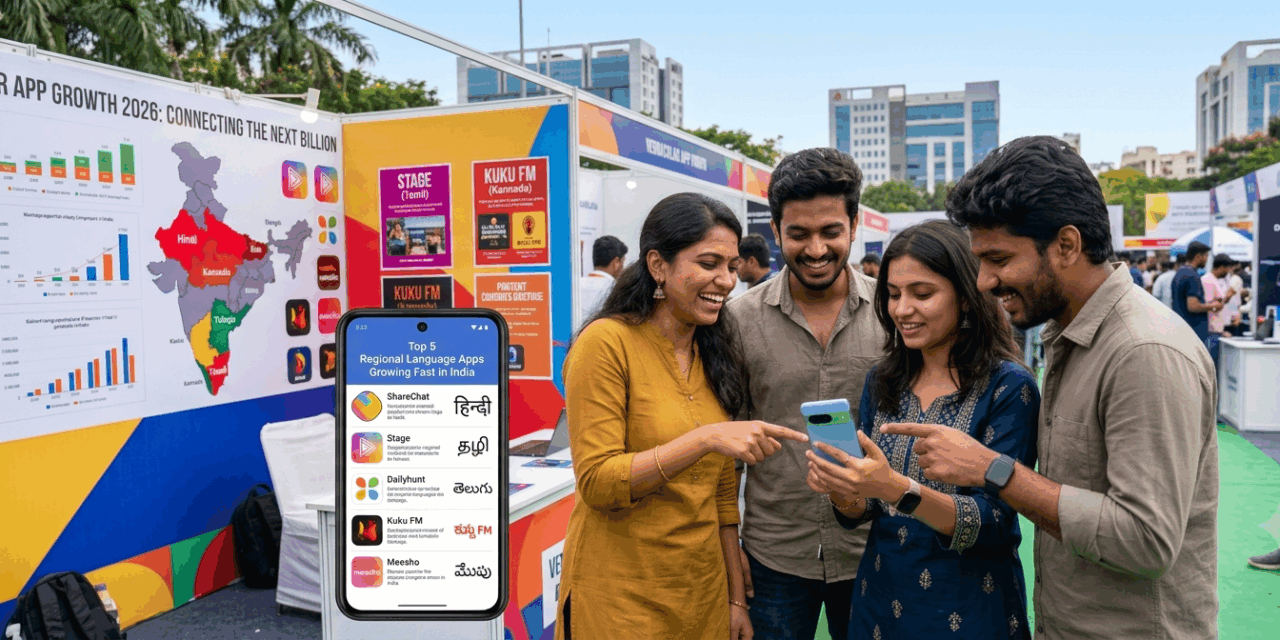
India’s next wave of new internet users is overwhelmingly coming from Tier 2 and Tier 3 cities where English fluency is far less common, and the apps genuinely winning that audience are the ones built from the ground up for regional languages rather than English-first products with a translation bolted on afterward. This shift has created real opportunity for a new generation of vernacular-focused apps across content, commerce, and communication, several of which have grown into genuinely significant platforms in their own right. The scale of this shift is genuinely hard to overstate, hundreds of millions of potential users remain underserved by English-only products. Here are five regional language apps in 2026 that have captured real momentum with India’s vernacular internet audience.
ShareChat
ShareChat built its entire platform around regional language content from the start, becoming a genuinely major social platform for users who prefer consuming and creating content in their native language rather than English.
Josh
Josh focuses on short-form video content specifically tailored to regional language audiences, filling a genuine gap for creators and viewers who want vernacular content in a short-video format.
Dailyhunt
Dailyhunt aggregates news and content across a genuinely wide range of Indian regional languages, becoming a primary news source for users who want local and national news in their preferred language rather than English.
Koo (and successors)
Koo emerged as a genuinely significant regional-language microblogging platform, demonstrating real demand for social conversation happening natively in Indian languages rather than English-dominated platforms.
Meesho
Meesho’s e-commerce platform grew significantly by prioritizing regional language interfaces and voice-based navigation, genuinely lowering the barrier for first-time online shoppers who aren’t comfortable navigating in English.
Why This Segment Matters So Much for India’s App Economy
English-first apps have historically captured the bulk of venture funding and mainstream attention, but the actual growth numbers increasingly point toward regional language users as the segment with the most genuine untapped potential, simply because there are hundreds of millions of Indians more comfortable transacting and communicating in their native language than in English. Developers who treat regional language support as a genuine core feature, not just a translated interface bolted onto an English-first product, tend to see meaningfully better retention and engagement from this audience, since a poorly localized experience is often easy for native speakers to spot immediately. Voice interfaces in particular have become a genuinely important entry point for this audience, since typing in some regional scripts remains more cumbersome than speaking, making voice-first design a real competitive advantage rather than just a nice bonus feature. Developers underestimating this specific friction point risk losing users at the exact first-use moment that determines whether an app earns a permanent spot on someone’s phone.
The regional language app segment represents one of the clearest remaining growth opportunities in India’s app economy, and developers building genuinely native vernacular experiences, not just translated ones, stand to capture a meaningfully underserved audience. Any Indian developer building a new consumer app should seriously evaluate regional language support as a core design decision from day one, rather than a feature to bolt on later once the English version has already found its audience. Testing early with genuine native speakers of the target language, not just machine translation review, remains the most reliable way to catch the small cultural and phrasing details that make an app feel truly local rather than merely translated, and that extra diligence tends to pay off considerably in long-term retention.