
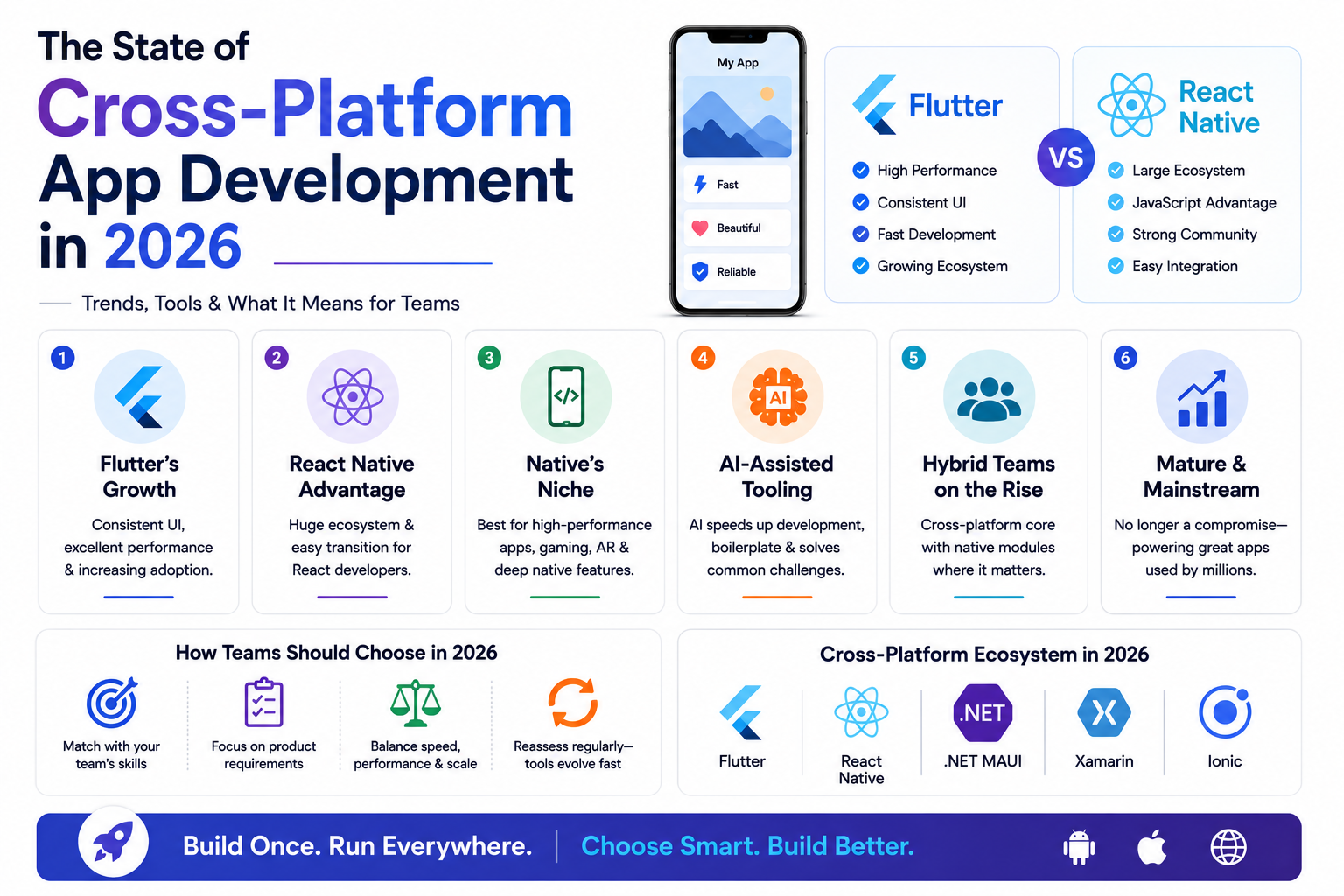
Cross-platform development has moved well past its early reputation for compromised performance and awkward, non-native-feeling interfaces, with both Flutter and React Native now powering genuinely polished, high-performance apps used by millions of people daily. That maturity has shifted the conversation among development teams, the question is increasingly less about whether cross-platform tools are good enough and more about which specific tool and team structure fits a given project best. Tooling and AI-assisted development have also narrowed the productivity gap that used to make cross-platform the obvious default for resource-constrained teams. Here’s an honest assessment of where cross-platform development actually stands in 2026, across the major frameworks and the teams choosing between them.
Flutter’s Continued Growth
Flutter has continued gaining adoption particularly among teams starting fresh without existing JavaScript expertise, valued for its consistent rendering across platforms and genuinely strong performance that closely approaches native app benchmarks in most common use cases.
React Native’s Ecosystem Advantage
React Native retains a genuine edge for teams with existing React web expertise, offering a considerably larger third-party library ecosystem and a more direct skills transfer for JavaScript developers moving into mobile development.
Native Development’s Persistent Niche
Fully native development, Swift for iOS and Kotlin for Android, remains the choice for apps demanding the absolute best performance or deepest platform-specific integration, particularly in gaming, AR, and apps pushing hardware capabilities to their limits.
The Rise of AI-Assisted Cross-Platform Tooling
AI coding assistants have started meaningfully reducing the traditional pain points of cross-platform development, helping developers navigate platform-specific edge cases and generate boilerplate faster than manual cross-platform work required just a few years ago.
Hybrid Team Structures Becoming More Common
A growing number of companies now run hybrid setups, cross-platform for the bulk of the app with select native modules for performance-critical or platform-specific features, capturing much of cross-platform’s efficiency without fully sacrificing native capability where it genuinely matters.
How Teams Should Actually Be Choosing in 2026
The decision increasingly comes down to existing team skills and specific product requirements rather than any objective ranking between frameworks, a team with strong React experience will likely ship faster with React Native, while a team starting completely fresh often finds Flutter’s more opinionated, consistent structure easier to onboard new developers into. Product requirements matter just as much, apps with heavy custom animation or platform-specific hardware integration needs should weigh native development more seriously regardless of team background, since cross-platform tools, however improved, still carry genuine limitations in these specific areas. The healthiest approach for most teams in 2026 involves being honest about actual requirements rather than defaulting to whichever framework is currently trending, since the right choice genuinely varies considerably by project.
Cross-platform development in 2026 is no longer a compromise choice made purely to save resources, it’s a legitimate, mature path that powers genuinely excellent apps used by millions of people every day. Teams evaluating their options should weigh existing skills, specific product requirements, and long-term maintenance considerations together, rather than treating this as a simple binary choice between cross-platform and native without deeper analysis of what a specific project actually needs. Revisit that decision periodically too, both frameworks continue evolving quickly enough that an assessment from even a year or two ago may no longer reflect their current capabilities. What was a genuine limitation two years ago may already be solved, so treating any framework comparison as permanent is a mistake worth avoiding.