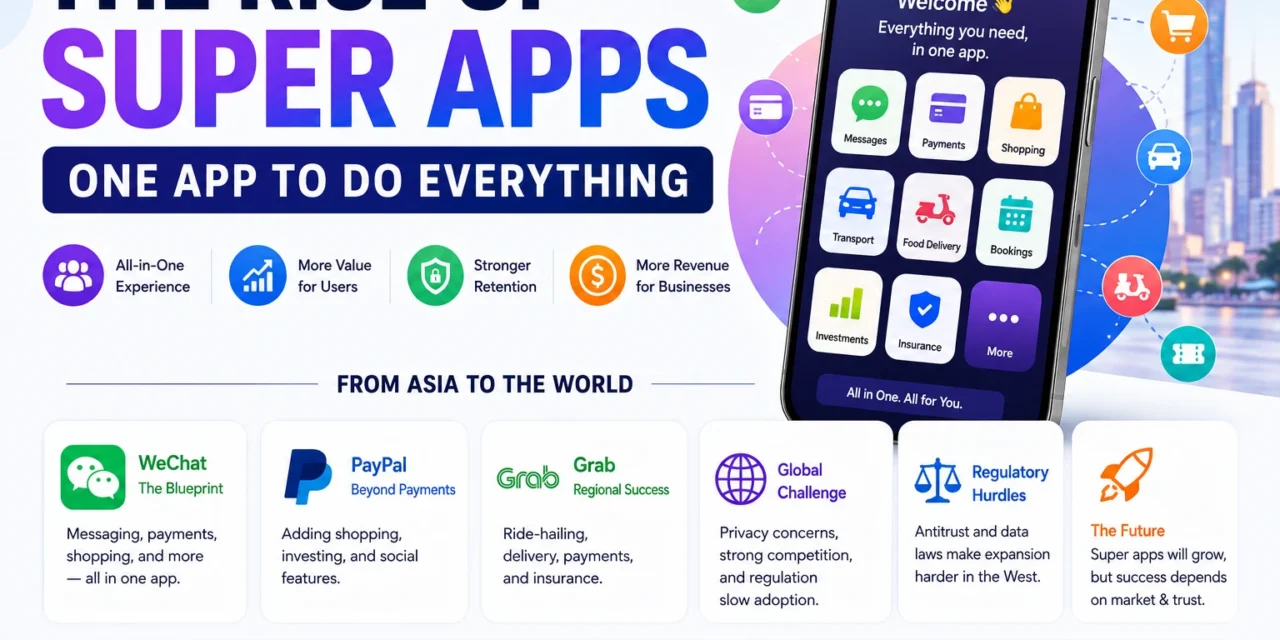
The super app concept, one app handling messaging, payments, shopping, and dozens of other services under a single login, has been the ambition of an increasing number of companies over the past several years, inspired heavily by the success of apps like WeChat in China. The appeal for businesses is obvious, owning the entire user relationship instead of competing for a sliver of attention against dozens of single-purpose apps. But replicating that model outside the specific market conditions that made it work in Asia has proven genuinely difficult, and it’s worth understanding why before assuming every app chasing this strategy will succeed.
The WeChat Blueprint
WeChat’s dominance in China grew from filling a genuine infrastructure gap, arriving before many competing single-purpose apps existed, and building trust as a payment and identity layer that other services eventually built on top of rather than competed against.
Why Payment Apps Keep Expanding
Apps like PayPal, CashApp, and various Indian fintech apps have steadily added shopping, investing, and social features on top of their original payment function, since payment data gives genuinely valuable insight into user behavior that can be monetized across new services.
Ride-Hailing and Delivery Apps Following Suit
Companies like Grab and Gojek in Southeast Asia expanded from ride-hailing into food delivery, payments, and even insurance, building a genuine super app model that has proven considerably more successful in that specific regional market than similar attempts have in the West.
Why the Model Struggles in Western Markets
Western users have historically shown more resistance to consolidating everything into one app, partly due to stronger existing habits around specialized apps and partly due to greater privacy concerns about a single company holding that much combined behavioral data.
Regulatory Pressure Adds Another Obstacle
Antitrust and data privacy regulators in the US and Europe have grown increasingly wary of any single app accumulating that much control over payments, communication, and commerce simultaneously, adding genuine legal friction that markets like China and parts of Southeast Asia haven’t faced to the same degree.
Is the Super App Model Actually Working Outside Asia
The honest answer is mixed, a handful of companies have found real success bundling adjacent services, ride-hailing plus delivery, or payments plus investing, but nobody in Western markets has come close to replicating WeChat’s true everything-app status covering messaging, payments, commerce, and government services under one roof. Part of that gap comes down to market structure rather than execution, Western digital ecosystems developed with many established, specialized competitors already deeply entrenched by the time super app ambitions emerged, unlike China’s comparatively blank slate when WeChat began expanding its scope. That structural difference matters more than most super app strategy discussions acknowledge, and it suggests the model may simply fit certain markets better than others rather than being a universal end state every app is destined to reach.
The super app dream remains a genuinely powerful business incentive, and companies will keep chasing it because the potential payoff of owning a user’s entire digital life is enormous. But the pattern so far suggests success depends heavily on specific market conditions, regulatory environment, existing competition, and user habits, rather than the strategy alone, which means most Western apps chasing this model should expect a much harder path than the WeChat comparison implies. Watching which specific service bundles actually stick with users, rather than just which ones get announced with fanfare, will tell the real story over the next few years.