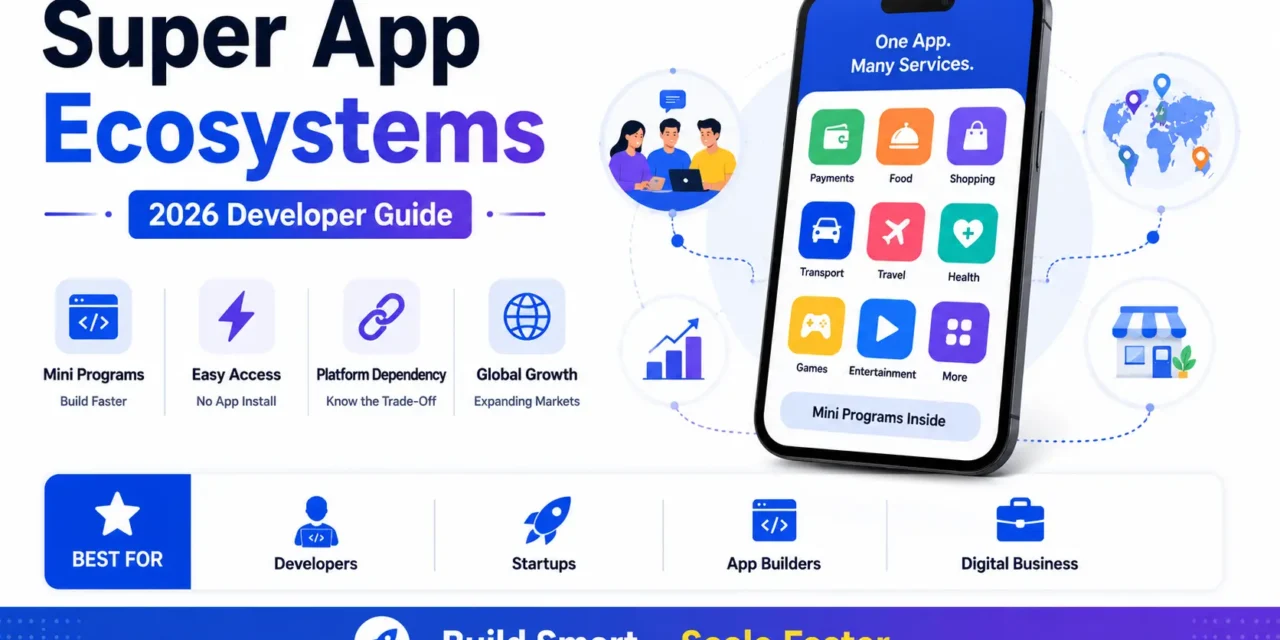
Super apps, a single app hosting dozens or hundreds of smaller mini programs for everything from payments to food delivery to games, pioneered largely in China through platforms like WeChat, have been steadily expanding into other markets throughout 2026, changing what building a mobile presence actually means for many developers and businesses. Rather than building and maintaining a fully separate standalone app with its own download friction and app store approval process, developers increasingly have the option to build a lightweight mini program that lives inside an existing super app’s massive user base, trading full independence for genuinely reduced distribution friction. This shift raises real strategic questions for developers about when borrowing a platform’s audience is worth the dependency it creates.
The Mini Program Development Model
Mini programs use simplified, often web-technology-based development frameworks specific to each super app platform, letting developers build lighter-weight experiences faster than a full native app, though this ties the resulting product to that specific platform’s ecosystem and rules.
Reduced Distribution Friction
Users can access a mini program directly within a super app they already have installed, without a separate download or app store approval process, meaningfully lowering the barrier for a user to try a new service compared to a full standalone app.
The Platform Dependency Tradeoff
Building primarily within a super app ecosystem creates genuine dependency on that platform’s continued goodwill, discovery algorithm, and revenue-sharing terms, a real business risk compared to owning a fully independent app relationship with users directly.
Regional Variation in Super App Adoption
Super app adoption varies considerably by region, with markets in Asia showing genuinely deep integration into daily life, while markets like the US and Europe have moved more cautiously, making a global mini program strategy require real region-specific consideration.
The practical calculation for developers increasingly involves weighing reduced distribution friction against genuine platform dependency risk, since a mini program that thrives on borrowed distribution can lose that advantage instantly if the host super app changes its algorithm, fee structure, or strategic priorities. Businesses testing a new market or service concept quickly increasingly find mini programs a genuinely useful low-commitment way to validate demand before investing in a full standalone app build. Established businesses with strong existing brand loyalty and a direct user relationship generally have more to protect by maintaining independent app ownership rather than routing that relationship through a third-party super app’s ecosystem. This trend connects to the broader pattern of platform power discussed in earlier coverage of AI-generated apps and app store regulation, where the balance between platform convenience and developer independence continues shifting in both directions depending on the specific regulatory and competitive pressures at play. Developers considering this path should study specifically how easy it is to eventually migrate users away from the mini program toward an independent app, since that exit path matters as much as the initial entry decision.
Super app ecosystems offer developers a genuinely compelling tradeoff, meaningfully reduced distribution friction in exchange for real dependency on a platform that ultimately isn’t theirs to control. Whether that tradeoff makes sense depends heavily on a specific business’s goals, quick market validation favors the mini program route, while building lasting, independent brand loyalty still generally favors a fully owned standalone app. Most successful strategies in 2026 increasingly treat these as complementary stages rather than a single permanent choice.