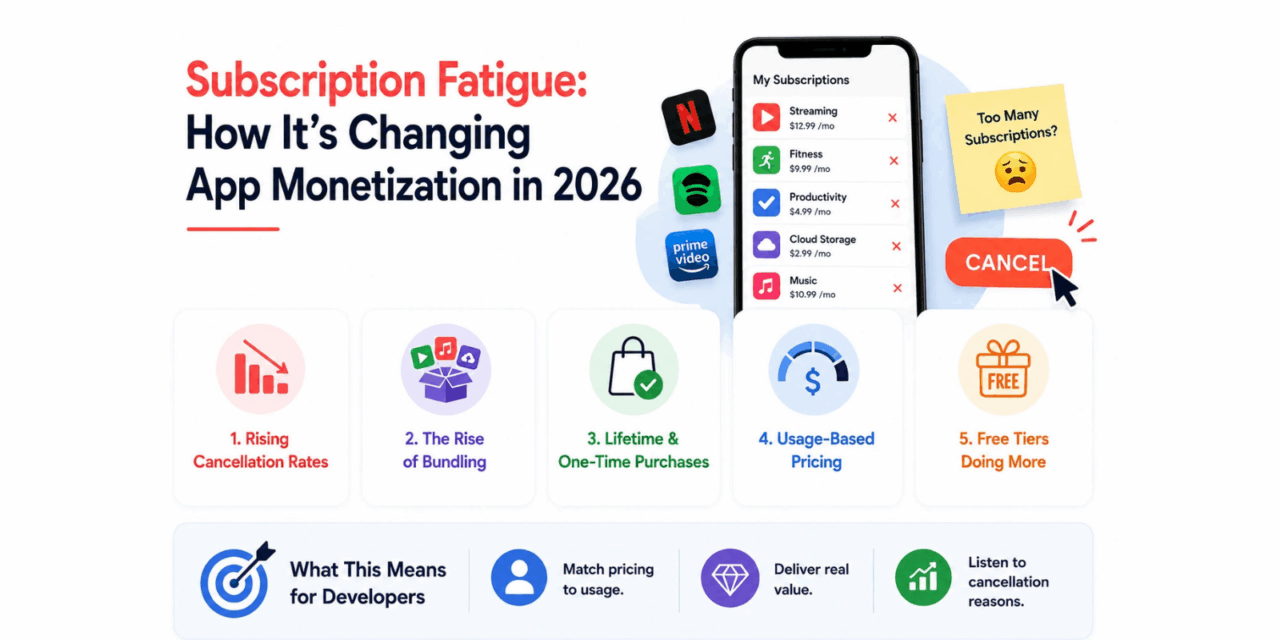
The average smartphone user in 2026 is juggling far more subscriptions than they realize, streaming services, fitness apps, productivity tools, and cloud storage all quietly billing monthly, and the cumulative cost has started producing genuine pushback in the form of subscription fatigue. Developers who once assumed subscriptions were the obvious default monetization model are increasingly finding that users scrutinize new subscription requests far more critically than they did just a few years ago, forcing a real rethink of how apps price and package their offerings. This shift is showing up across nearly every app category, not just in one niche corner of the market.
Rising Cancellation Rates
Subscription cancellation rates have climbed steadily as users conduct periodic audits of their recurring charges, canceling apps that don’t deliver clear, consistent value, a shift that’s forced developers to focus more heavily on ongoing engagement rather than just initial conversion.
The Rise of Bundling
Some developers have responded to fatigue by bundling multiple products into a single subscription, reducing the number of separate billing relationships a user needs to maintain and making the combined value proposition easier to justify than several standalone charges.
Lifetime and One-Time Purchase Comebacks
A meaningful number of apps have started reintroducing one-time purchase options alongside subscriptions, responding directly to user preference for owning something outright rather than committing to indefinite recurring payments for tools they use only occasionally.
Usage-Based Pricing Alternatives
Some developers are experimenting with usage-based or credit-based pricing instead of flat subscriptions, letting users pay only for what they actually use, a model that appeals particularly to occasional users who felt subscriptions overcharged them relative to actual usage.
Free Tiers Doing More Work
Free tiers have grown more generous in response to fatigue, since a stingy free tier increasingly drives users straight to a competitor rather than converting them to a paid plan, forcing developers to prove more value before asking for payment.
What This Means for Developers Building New Apps
Defaulting to a subscription model without carefully considering whether it genuinely fits the app’s usage pattern is an increasingly risky bet, since users have grown considerably more willing to abandon a subscription app entirely rather than tolerate a pricing model that doesn’t match how they actually use the product. Apps genuinely used daily still support subscriptions reasonably well, since the recurring value is clear and constant, but apps used occasionally or seasonally are increasingly better served by one-time purchases, credit systems, or generous free tiers that don’t demand an ongoing commitment for infrequent use. Developers should also expect subscription price sensitivity to keep rising as the cumulative subscription burden on the average user continues to grow, making genuinely differentiated value, not just a subscription wrapper around basic functionality, more important than ever to actual retention.
Subscription fatigue doesn’t mean the model is dying, plenty of apps with clear, consistent daily value continue to retain subscribers well, but it does mean developers can no longer assume users will tolerate a subscription just because that’s become the default pattern across the industry. Matching the monetization model to actual usage frequency and being honest about whether an app delivers genuinely ongoing value is increasingly the difference between sustainable subscription revenue and a wave of cancellations once the initial novelty wears off. Developers who track cancellation reasons carefully, rather than just cancellation rates, tend to spot these mismatches earlier than those relying on aggregate metrics alone.