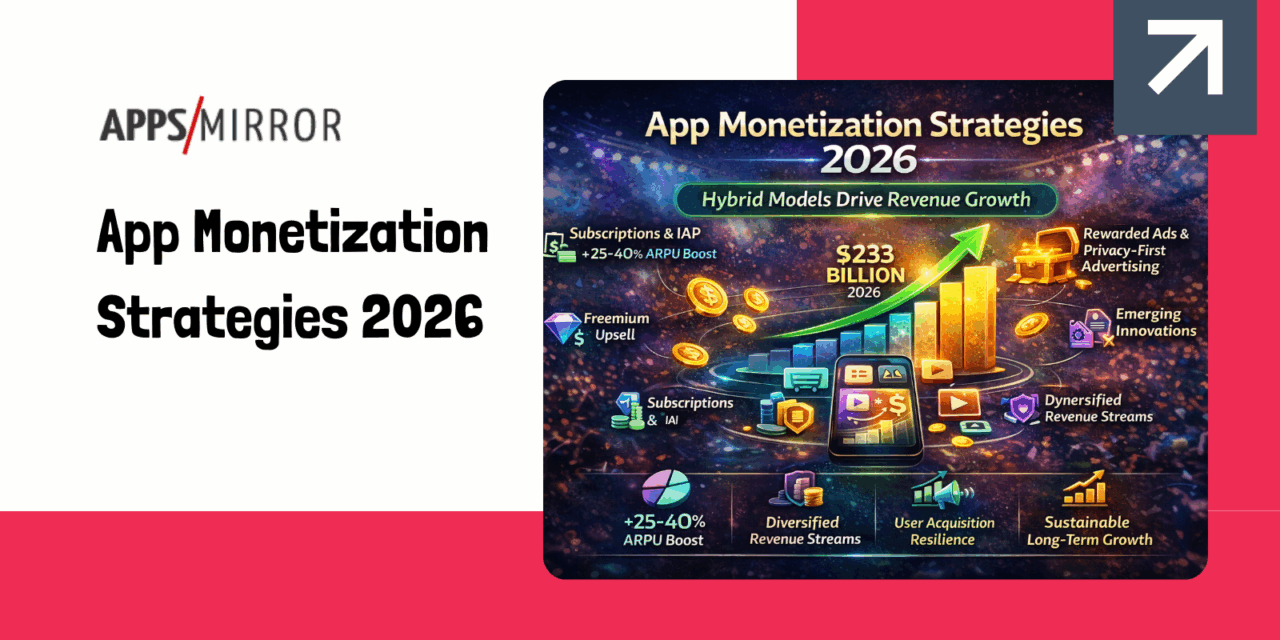
The app economy stands at a critical inflection point. Global consumer spending is projected to reach $233 billion by 2026, yet only a small fraction of apps will capture meaningful revenue from this massive market. The difference between apps that thrive financially and those that struggle isn’t luck—it’s strategic monetization planning aligned with how users actually derive value.
The Death of Single-Revenue Models
The era of relying on a single monetization stream has ended. Research shows that over 60% of top-grossing apps now employ hybrid monetization models, combining subscriptions, in-app purchases, and advertising into cohesive revenue strategies. This diversification isn’t just about maximizing income—it’s about survival in an environment where user acquisition costs have skyrocketed and privacy changes have disrupted traditional advertising models.
The numbers tell a compelling story. Apps using hybrid monetization approaches report 25-40% higher average revenue per user compared to single-model competitors. This advantage compounds over time as diversified revenue streams create resilience against market shifts, platform policy changes, and evolving user preferences.
Consider the transformation in dating apps. Traditional models charged flat monthly subscriptions providing unlimited access. Modern approaches layer consumable purchases atop subscriptions—Super Likes, profile boosts, and visibility enhancements—enabling engaged users to spend uncapped amounts while casual subscribers pay baseline fees. This hybrid structure dramatically increases revenue potential without alienating price-sensitive users.
In-App Purchases: The Revenue Powerhouse
In-app purchases continue dominating mobile monetization, generating 48.2% of total mobile app earnings. The market is experiencing explosive growth, valued at $209 billion in 2024 and projected to reach $257 billion by 2026—a staggering 23% compound annual growth rate.
However, implementation complexity has increased significantly. Successful IAP strategies now require sophisticated understanding of user psychology, behavioral economics, and purchase timing. Apps must balance monetization pressure against user experience quality, as excessive or poorly timed purchase prompts drive churn faster than they generate revenue.
The most effective approaches segment users based on engagement levels and spending propensity. Power users receive premium offers for exclusive features, casual users see value-oriented consumable purchases, and free users encounter strategic upgrade prompts at moments of peak engagement. Machine learning algorithms increasingly optimize these decisions in real-time, personalizing offers based on individual user behavior patterns.
Platform economics significantly impact IAP profitability. Apple and Google levy 15-30% commissions on app store purchases, creating strong incentives for web-to-app billing approaches that can improve margins by 25% or more. However, implementing alternative payment methods requires careful navigation of platform policies and user experience considerations to avoid friction that reduces conversion rates.
Subscription Fatigue Creates New Challenges
While subscriptions have powered much of the mobile economy’s growth, users are reaching saturation points. By 2026, subscription fatigue drives significant shifts in how apps approach recurring revenue. Users are cutting generic utility apps priced at $5-10 monthly, reserving subscription budgets for applications delivering clear, measurable value.
Premium subscriptions at $30+ per month are thriving in specific niches where apps deliver tangible outcomes. Fitness applications generating verifiable health improvements, productivity tools demonstrably increasing earning capacity, and professional software replacing desktop alternatives justify higher price points through documented results.
Professional app development and marketing services increasingly emphasize value demonstration over feature lists when optimizing subscription conversion. Apps must prove worth before requesting payment commitments, using free trials, limited freemium tiers, and gradual feature unlocking to build trust and demonstrate value.
Flexible subscription models are emerging as responses to user fatigue. Annual subscriptions with significant discounts over monthly rates lock in longer-term revenue while appearing more affordable. Pause-and-resume functionality reduces cancellations by accommodating users’ changing circumstances rather than forcing all-or-nothing decisions. Family plans and bundled offerings spread costs across multiple users, improving perceived value while increasing household penetration.
Privacy-First Advertising Evolves
The advertising landscape has transformed fundamentally following Apple’s App Tracking Transparency and similar privacy initiatives. Contextual targeting and on-device analytics now dominate monetization strategies, replacing cross-app tracking with in-app behavior analysis and real-time engagement signals.
Global mobile ad spending is projected to reach $390 billion in 2026, demonstrating that advertising remains viable despite privacy changes. However, success requires more sophisticated implementation than simply displaying ads to users. Effective strategies prioritize user experience alongside revenue generation, recognizing that excessive or poorly timed advertising drives uninstalls and negative reviews that undermine long-term profitability.
Rewarded video ads have emerged as the clear winner in ad format effectiveness. Users voluntarily watch advertisements in exchange for in-app benefits—extra lives in games, premium content access, or enhanced features. This value exchange creates positive user experiences while delivering high eCPMs that can exceed $15-30 in tier-one markets. Engagement rates for rewarded ads significantly outperform interstitial or banner alternatives, making them the preferred choice for apps prioritizing both revenue and user satisfaction.
The shift toward transparent, user-controlled advertising also addresses brand safety concerns. Advertisers increasingly demand high-quality inventory where their messages appear alongside appropriate content in safe environments. Apps demonstrating strong moderation, engaged user bases, and premium positioning command advertising premiums while maintaining user trust.
Freemium Models Require Precise Calibration
The freemium model—offering core functionality free while charging for advanced features—remains popular but requires increasingly sophisticated implementation. Success hinges on creating compelling value gaps between free and premium tiers that motivate upgrades without alienating non-paying users.
The calibration challenge is substantial. Free tiers must provide sufficient value to drive adoption and daily usage while maintaining clear limitations that premium features address. Apps that make free tiers too restrictive fail to build engaged user bases. Those offering too much free functionality struggle converting users who see no compelling reason to pay.
Leading freemium apps employ data-driven approaches to optimization. A/B testing different feature access levels, analyzing upgrade conversion funnels, and monitoring user engagement patterns across tiers informs iterative improvements. The goal is identifying the minimum feature set that creates sticky free experiences while reserving truly valuable capabilities for premium subscribers.
The most successful implementations create tiered premium offerings rather than simple free-versus-paid dichotomies. Basic premium tiers provide essential upgrades at accessible price points, while advanced tiers command higher prices through professional features, priority support, and exclusive content. This structure captures revenue across user segments with varying willingness to pay rather than forcing one-size-fits-all decisions.
Emerging Monetization Innovations
Several emerging approaches are gaining traction as apps seek competitive advantages in crowded markets. Dynamic pricing uses AI to adjust subscription rates and purchase prices based on user behavior, market conditions, and individual willingness to pay. While controversial, early adopters report significant revenue improvements when implemented transparently.
Blockchain integration enables new monetization mechanisms including NFT sales, cryptocurrency payments, and decentralized marketplace functionality. While still niche, these approaches appeal to specific user segments and provide differentiation in oversaturated categories.
In-app commerce is blurring lines between applications and storefronts. Social apps integrate shopping experiences, fitness platforms sell merchandise and equipment, and content apps become distribution channels for physical products. These commerce integrations create high-margin revenue streams independent of platform commissions while deepening user relationships.
Super app strategies consolidate multiple services within unified platforms, creating monetization opportunities across diverse functions. Users ordering food, booking transportation, and managing finances within single applications generate revenue through varied mechanisms while benefiting from seamless integrated experiences.
Implementation Best Practices
Successful monetization requires strategic implementation aligned with user psychology and technical capabilities. Apps should introduce monetization gradually, allowing users to experience value before encountering payment requests. Immediate paywalls alienate users who haven’t yet understood what makes apps worth paying for.
Clear value communication is essential throughout monetization funnels. Users need to understand exactly what they receive in exchange for payments and why premium features justify their prices. Vague benefits or hidden limitations damage trust and reduce conversion rates.
Testing and iteration separate thriving apps from struggling competitors. Continuous experimentation with pricing levels, feature packaging, promotional tactics, and UI implementation reveals optimization opportunities that compound over time. Successful apps treat monetization as ongoing processes requiring regular refinement rather than one-time decisions.
User feedback integration ensures monetization strategies align with actual user preferences rather than developer assumptions. Surveys, support ticket analysis, and review monitoring provide valuable insights into what users value, what frustrates them, and what they’d willingly pay for if offered appropriately.
Metrics That Matter
Effective monetization requires rigorous measurement and analysis. Average revenue per user indicates overall monetization effectiveness but should be segmented by user cohorts, acquisition channels, and engagement levels to identify optimization opportunities. Lifetime value projections guide acquisition spending and retention investments by quantifying long-term user worth.
Conversion rates throughout monetization funnels reveal friction points where potential revenue leaks away. Monitoring conversions from free to paid, trial to subscription, and basic to premium tiers identifies specific opportunities for improvement. Small conversion increases compound significantly across large user bases.
Churn analysis reveals whether monetization strategies maintain sustainable user bases or drive unsustainable attrition. Comparing churn rates between user segments and following pricing changes provides early warning of monetization approaches that damage long-term viability despite generating short-term revenue.
Looking Forward
Monetization strategies will continue evolving rapidly as technologies mature, user preferences shift, and competitive pressures intensify. Apps that remain flexible, user-focused, and data-driven in their approaches will capture disproportionate shares of growing market revenues.
The winners in 2026’s app economy won’t be those with the most aggressive monetization tactics but rather those creating genuine value that users willingly pay for. Sustainable monetization aligns business success with user satisfaction, creating virtuous cycles where revenue growth funds continuous improvements that justify ongoing user investment.
For apps entering or optimizing within this competitive landscape, the message is clear: hybrid monetization strategies, rigorous testing, user-centric design, and continuous iteration aren’t optional extras—they’re fundamental requirements for financial sustainability and long-term success.